Banner image for Ice Fishing in Ontario failed to load
Hardwater Season
Ice Fishing in Ontario
Safety, species, gear and where to fish through the hardwater season.
From first ice on the back bays to late-season lake trout, everything you need to fish Ontario's winter safely.
Ontario's Hardwater Season
Ontario's ice fishing runs from first-ice in December through late-season lake trout in March, with fisheries as varied as Lake Simcoe perch, Nipissing walleye, Bay of Quinte walleye and pike, and Shield-lake whitefish. It's some of the best fishing of the year — but the margin for error is smaller than open water. Start with safety, stay mobile, and match your presentation to cold, sluggish fish.
Featured Safety Article
Cold Water Safety: What Every Ontario Angler Needs to Know
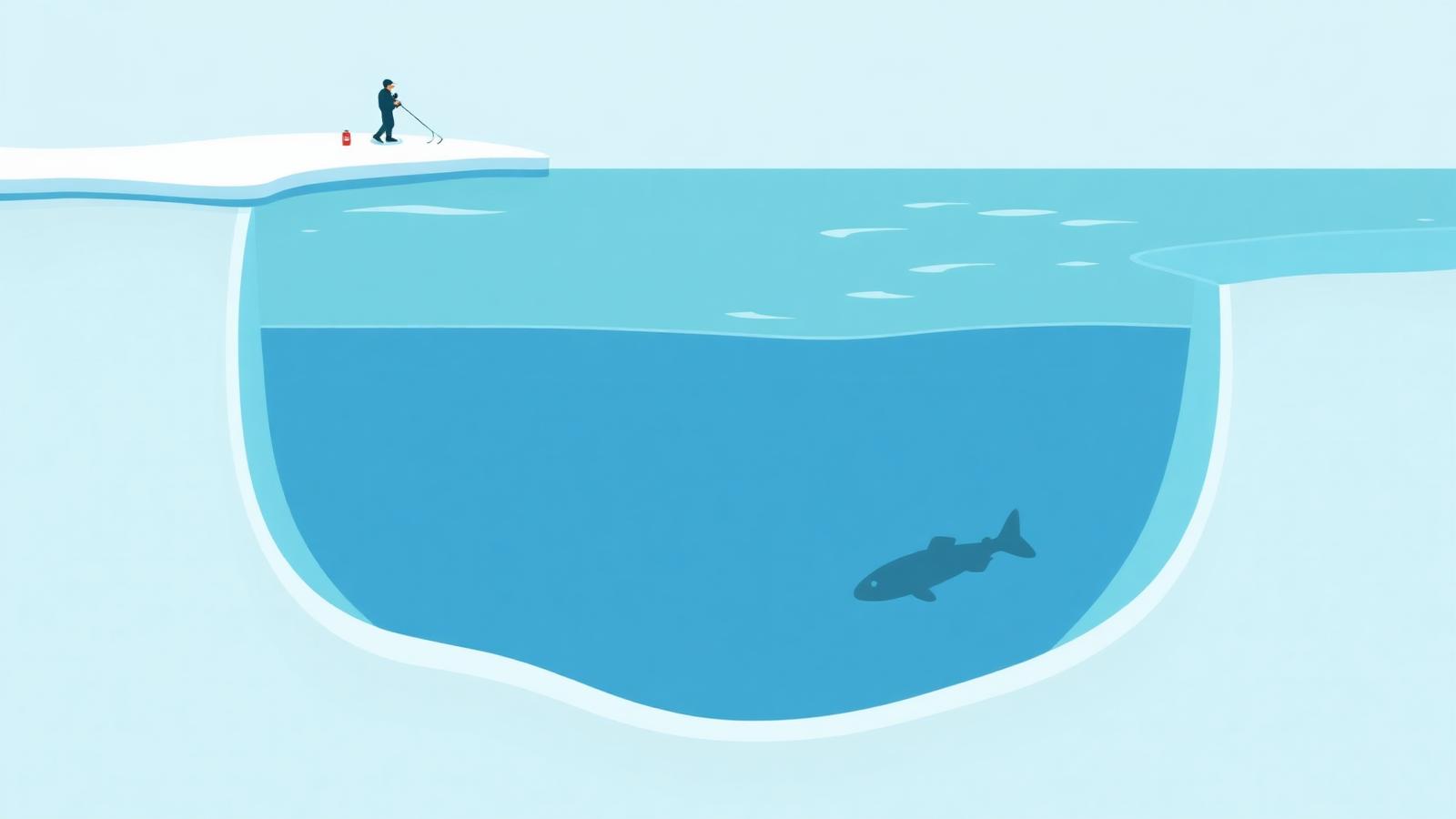
Ontario's best early- and late-season fishing lines up with the most dangerous water of the year. Cold shock, swim failure, and the 1-10-1 rule explain why — and what to actually do about it.
Reference Guide
Ice Thickness Guide: How Thick Is Safe for Ontario Ice Fishing?
Minimum clear-blue ice thicknesses for walking, snowmobiles, ATVs and light vehicles in Ontario — plus why white ice is only about half as strong and how to check as you go.
Printable Ice Safety Infographics
Tap an image to view it full-size, or download the printable PDF for the shanty wall.
Ice Fishing Resources
5 Mistakes New Ice Anglers Make
The most common early-season errors on Ontario ice — and simple fixes for each.
Cold Water Safety
How cold shock, swim failure, and the 1-10-1 rule really work.
Ice Thickness Guide
How thick is safe for walking, snowmobiles, ATVs and light trucks.
Species Guides
Perch, walleye, lake trout, whitefish and pike behaviour under the ice.
Fishing Rules & Winter Seasons
Zone-by-zone winter seasons, size and possession limits, and licence info.
Fishing Spots
Lakes across Ontario known for productive hardwater fisheries.
Live Ice & Weather Conditions
Current air temperature, wind and radar for planning a safe day on the ice.
Beginner's Guide
Start-here fundamentals that carry straight over to your first ice season.
Ice Fishing Gear Checklist
- Ice picks worn around the neck for self-rescue
- Spud bar or auger to test ice as you go
- Cleats or ice creepers to reduce falls
- Insulated, waterproof boots rated well below freezing
- Layered clothing with a windproof outer shell
- Floater suit or float jacket in early- and late-ice windows
- Shorter, sensitive ice rod plus tungsten jigs & small spoons
- Flasher / ice sonar to stay mobile and find fish faster
- Portable shelter for wind protection on big lakes
- Fully charged phone in a waterproof case (VHF if you have one)
Always check local ice conditions with a bait shop, outfitter, or club before heading out. Ice thickness varies across a single lake — around inlets, narrows, pressure ridges, and current — even when the rest of the surface looks solid.