There are fishing experiences, and then there are fly fishing experiences. The deliberate cast, the careful read of the water, the rush of a wild trout taking a dry fly off the surface — it's a style of angling that demands more of you and gives more back in return. Ontario, with its countless rivers, cold northern streams, and diversity of species that few provinces can match, is one of the finest fly fishing destinations in the world.
Whether you're chasing steelhead on a roaring Georgian Bay tributary, casting dry flies to speckled trout in Algonquin's tea-coloured streams, or throwing big streamers at pike in a northern wilderness river, Ontario delivers fly fishing for every skill level, every season, and every species. Here's what you need to know.
Ontario's fly fishing isn't a one-species game, and that's a big part of what makes it exceptional.
Brook Trout are the crown jewel. Ontario holds some of the finest brook trout water in North America, and the world record — a massive 14.5-pound fish — was caught right here on the Nipigon River. Speckled trout, as Ontarians often call them, are found from southern streams all the way into the tributaries of James and Hudson Bay.
Steelhead (lake-run rainbow trout) are the marquee species for most Ontario fly anglers. They run rivers from September through spring, with peak action in October–November and again in March–April. Ontario's record rainbow trout weighed in at over 40 pounds.
Brown Trout inhabit many of Ontario's southern rivers and offer some of the most technically challenging fly fishing in the province — the Saugeen produces browns up to 30 inches.
Chinook and Coho Salmon run most rivers flowing into Lake Ontario and Lake Huron each fall, offering explosive action from September onward. A 7 or 8-weight rod is the minimum.
Smallmouth Bass, Northern Pike, and Muskie round out the picture, particularly in warmer months — fast-growing in popularity for top-water and streamer fly anglers.
Southern Ontario — The Grand River is arguably the most important fly fishing river in Southern Ontario and one of the province's finest brown trout fisheries, with strong runs of steelhead and salmon in fall and spring.
The Saugeen River in Bruce County offers deep pools, challenging rapids, and serene meadow stretches packed with brown, brook, and resident rainbow trout, plus excellent fall and spring steelhead runs by drift boat.
The Ganaraska River near Port Hope is one of the best steelhead and salmon rivers flowing into Lake Ontario. Note that as of fall 2024, new regulations closed some lower river sections seasonally — always check current OMNR regulations.
The Credit River and Duffins Creek offer accessible steelhead opportunities for GTA anglers. The Maitland, Bighead, Nottawasaga, and Beaver rivers are excellent Huron and Georgian Bay tributaries.
Northern Ontario — The Nipigon River is one of the most storied brook trout rivers on the continent and birthplace of the world record. Algoma Country offers pristine, crystal-clear water across a wide range of species. For the full wilderness experience, Sunset Country, the James Bay Frontier, and deep Algonquin Park produce brook trout fishing of a quality that's increasingly rare in North America.
Dry Fly Fishing — Presenting a floating fly on the surface to imitate adult insects is the most visually exciting method, and Ontario's trout streams shine for it. The best dry fly fishing coincides with mayfly and stonefly hatches of late spring and early summer. In Algonquin Park, May and June are peak dry fly months.
Nymphing — The most consistently productive fly fishing technique in Ontario, particularly for steelhead and trout. Traditional indicator nymphing is the most accessible approach for beginners; Euro nymphing is growing rapidly among Ontario guides for its ability to produce fish in a wide variety of water types. For steelhead, a 7-weight, 10-foot rod is the standard.
Streamer Fishing — Larger, often articulated flies imitating baitfish, leeches, or other substantial prey. The method most likely to produce the largest fish in the river on any given day, and the technique of choice for pike, muskie, and bass.
Spey Fishing — Long two-handed rods to swing flies across the current with elegant roll casts. Particularly effective on bigger Ontario steelhead rivers where wading allows access to long runs and pools.
For Brook Trout — Northern Ontario guides recommend Adams (12–18), Elk Hair Caddis, Stimulator (orange/olive), Goddard Caddis, Humpy (green/yellow), and Black Gnat. For subsurface and streamer work, Woolly Buggers in black, white, and olive are indispensable, along with mice patterns, Chernobyl Ants, and Barr's Meat Whistle in chartreuse.
For Steelhead and Salmon — Roughly 75% of Ontario steelhead are caught on egg patterns, nymphs, or streamer-style flies fished as nymphs. Egg Fly patterns in pink, orange, and yellow, plus Pheasant Tail, Stonefly, Hare's Ear, and Prince Nymphs all produce consistently. Woolly Buggers and Egg Sucking Leeches are must-haves.
For Brown and Rainbow Trout — Pheasant Tail, Hare's Ear, Prince Nymph, and Stonefly Nymph cover most situations. For dries, the Royal Coachman, Adams, Humpy, and Elk Hair Caddis are reliable across Ontario. For big browns, 1–4 inch streamers in natural baitfish colours — olive, brown, white, and black.
For Pike, Bass, and Muskie — Poppers in black, yellow, and orange for bass on the surface. Large white Zonkers (8 through 1/0) for fast, aggressive retrieves. For pike and muskie, large articulated streamers, Deer Hair Poppers, and outsized Woolly Bugger variants on 8 to 10-weight rods.
- Trout in small/medium streams — 3–5 weight, 7–9 ft, floating WF line; 4X–5X tippet for dries, 3X for nymphs.
- Trout in large rivers (Saugeen, Grand) — 5–6 weight, 9–10 ft for better line control and mending.
- Steelhead — 7-weight, 10-foot rod with large-arbor reel and reliable disc drag; 0X/1X fluorocarbon leader, 3X tippet.
- Salmon — 7 or 8-weight minimum; many anglers on larger rivers prefer 9-weight.
- Pike and Muskie — 8 to 10-weight setups with 50 lb wire or heavy fluorocarbon leaders.
- Brook Trout in lakes — 5 or 6-weight, 8.5–9.5 ft, with floating, intermediate, and full sinking lines.
Spring (April–June): Steelhead runs peak in March–April on most Lake Ontario and Lake Huron tributaries. Trout season opens on the fourth Saturday in April across most of the province. May and June bring the best dry fly hatches in Algonquin and Algoma.
Summer (July–September): Bass, pike, and muskie fishing reaches its peak with fly rod in hand. Brook trout in northern cold-water rivers remain active throughout summer. The Saugeen and Grand offer excellent summer brown trout fishing when hatches align.
Fall (September–November): Perhaps the most exciting season for Ontario fly anglers. Chinook salmon enter rivers from September onward, followed by steelhead and brown trout across the Saugeen, Grand, Ganaraska, Credit, and dozens of smaller systems.
All anglers require an Outdoors Card and valid fishing licence to fish in Ontario. Trout season on most waters runs from the fourth Saturday in April through the last day of September, with regulations varying by FMZ and individual water body. Always consult the current Ontario Fishing Regulations Summary and the OMNR's Fish ON-Line tool before heading out.
If you're new to fly fishing in Ontario, or new to a specific river, investing in a guided trip is one of the best decisions you can make. The Grand, Saugeen, Ganaraska, and northern Ontario regions all have well-established guiding operations. Lodges in Sunset Country, Algoma, and the Temagami/French River regions offer fly fishing-specific packages.
Fly fishing in Ontario isn't just a hobby — for many, it becomes something closer to a way of life. The intimate small stream experience of casting dries to Algonquin brookies bears almost no resemblance to standing waist-deep in a roaring Georgian Bay tributary waiting for a chrome steelhead to take a swung fly. Both are Ontario fly fishing. Both are extraordinary.
Pick a river. Learn it. And then learn another one. Ontario will keep surprising you for the rest of your life.
Tight lines.
More fishing near Algonquin Park
Topic Hub
Trout Fishing Ontario
Everything you need on this topic
Related Articles
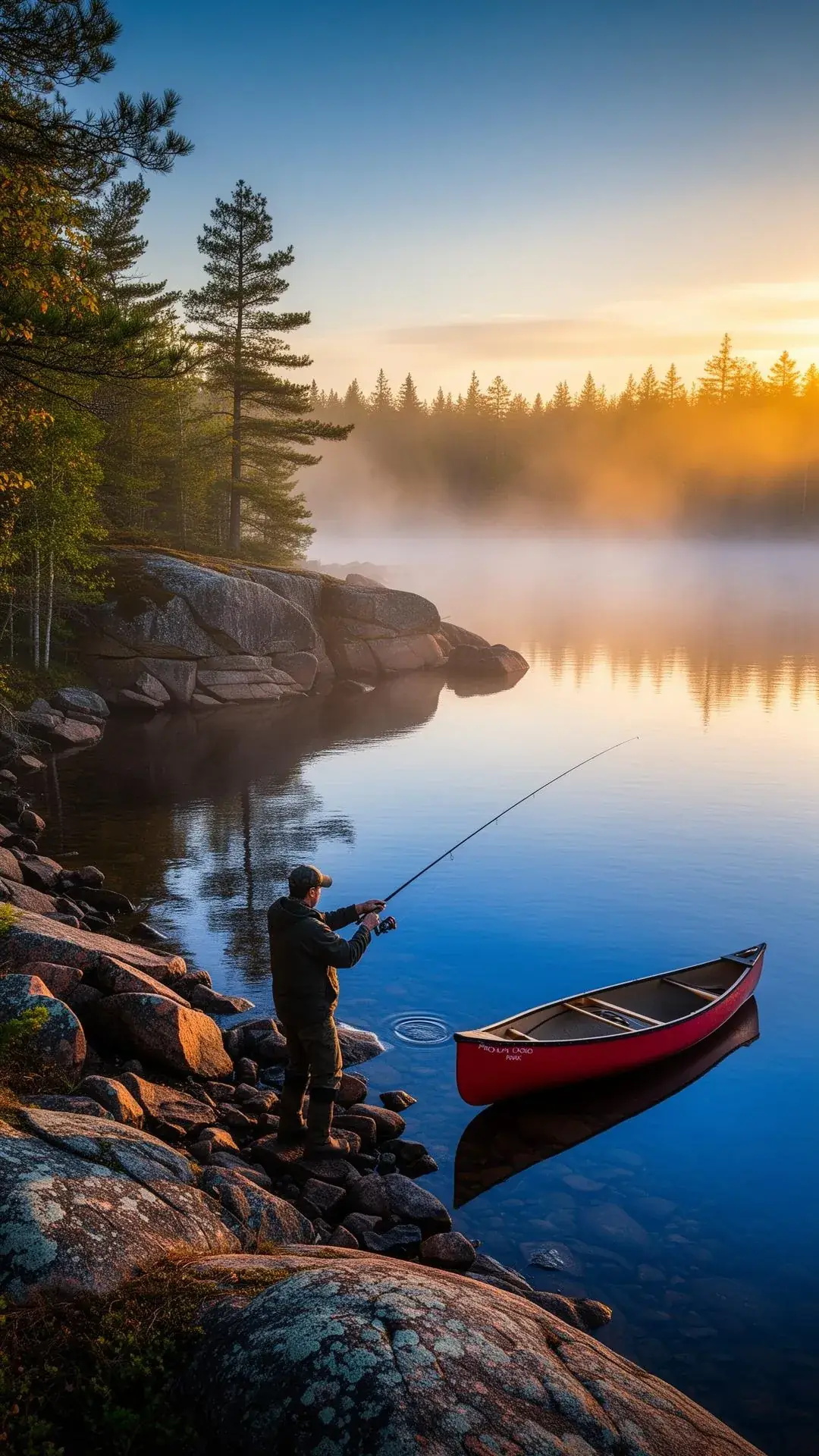
Fishing Spots
Fishing Ontario's Provincial Parks: A Province-Wide Guide to Casting in Protected Waters
From Algonquin's brook trout to Wabakimi's walleye — how to fish Ontario's best-protected, least-pressured waters.
Seasons
The Ultimate Summer Fishing Guide for Ontario Anglers
What's biting, where to find them, how to fish them, and what gear to bring for every major summer species in Ontario.
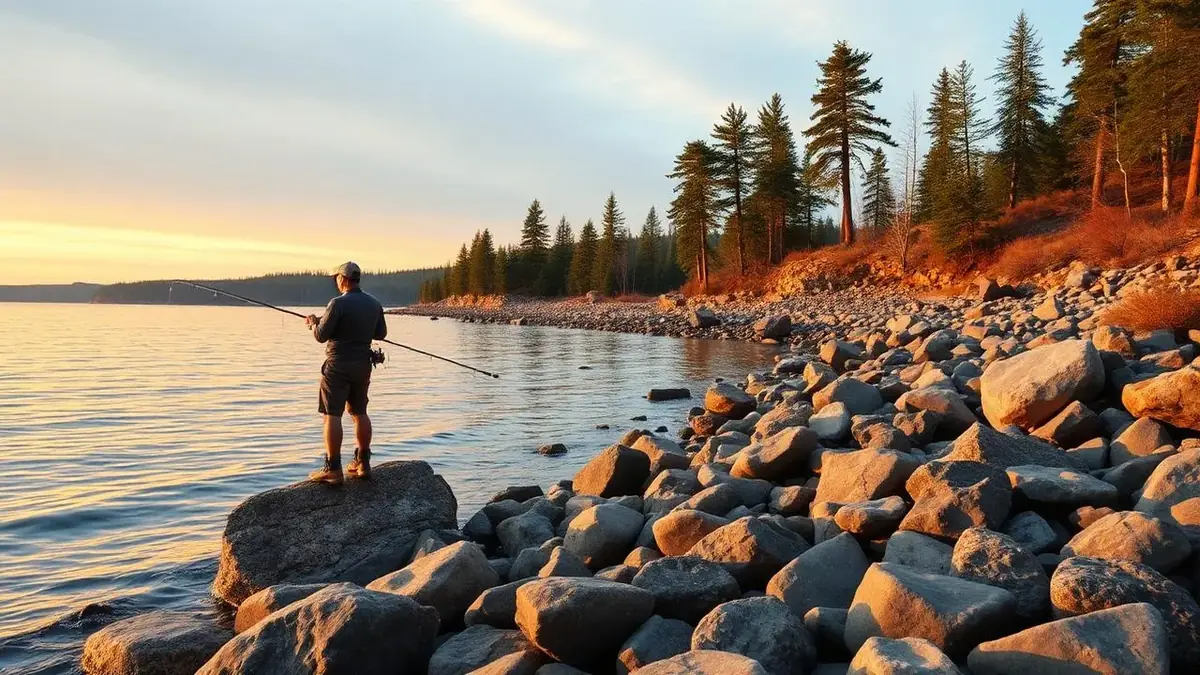
Fishing Spots
Top 10 Shore Fishing Locations in Ontario
Your Complete Bank Angler's Guide — No Boat Required.
Topic Hub
Trout Fishing Ontario
Everything you need on this topic