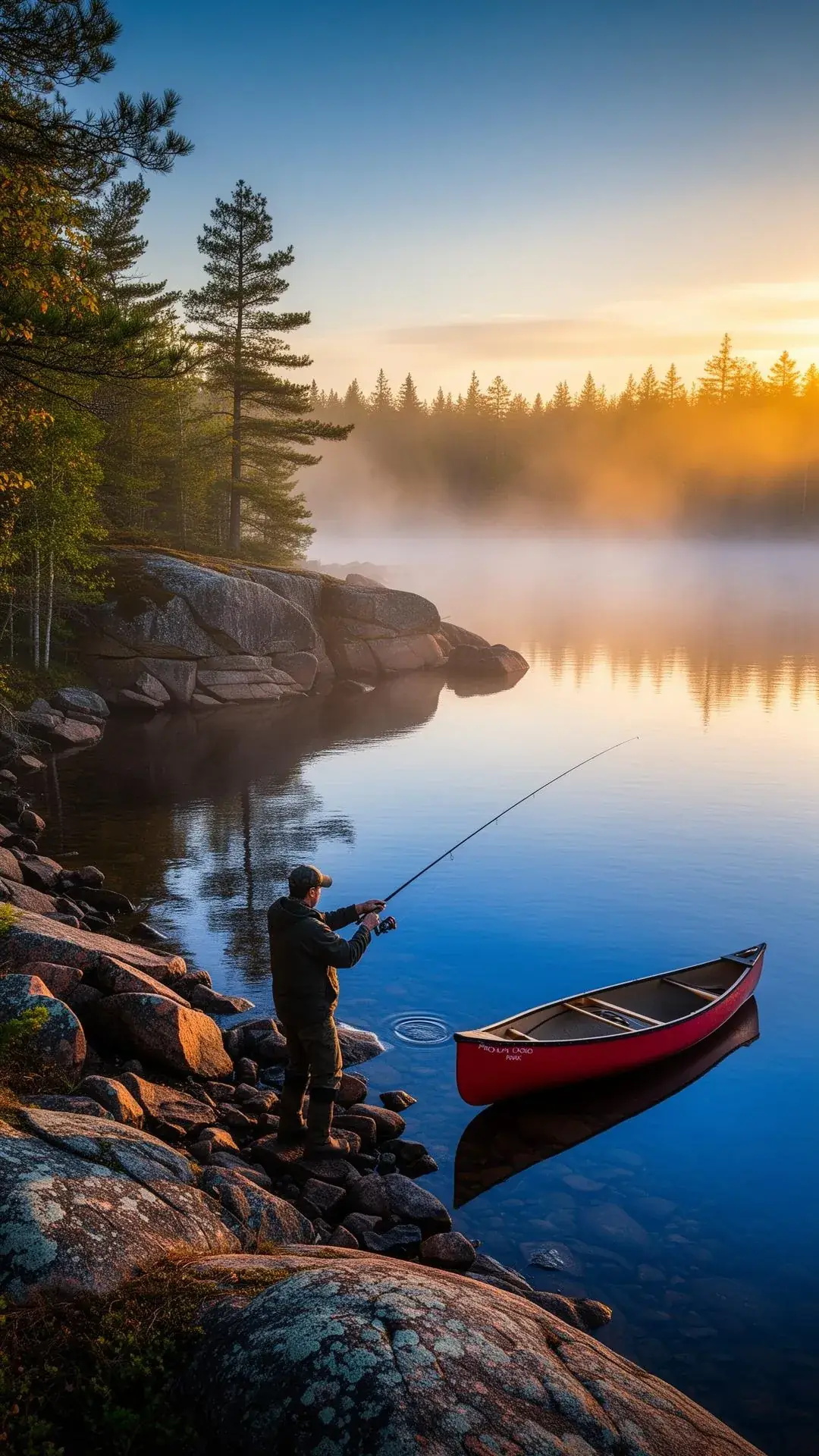
Summer is prime time on Ontario's water. With the ice long gone, seasons fully open across most species, and fish in full feeding mode, July and August offer some of the most action-packed fishing of the year. Whether you're chasing bronzeback Smallmouth Bass off a Georgian Bay shoal, working deep weeds for toothy Northern Pike, or hunting Muskie on one of Ontario's legendary trophy fisheries, summer delivers. But it also throws challenges at you — warming water temperatures, boat traffic, and fish that can push surprisingly deep or switch to nocturnal feeding patterns.
This guide breaks down what's biting, where to find them, how to fish them, and what gear to bring for every major summer species in Ontario. Read it, use it, and get out there while the season is at its peak. For week-by-week intel, pair this guide with our latest weekly fishing report.
Before you load the truck, it helps to understand what's happening beneath the surface once summer sets in. As water temperatures climb through June and into July, most species go through a major behavioural shift. The post-spawn frenzy of late spring gives way to a more deliberate, structure-oriented summer pattern.
For many species, the answer to summer heat is depth. Walleye push off their shallow spring haunts toward deeper structure. Pike and Muskie slide into the green cabbage weed beds and rock drops where the water stays cooler. Trout vacate the upper river sections as temperatures rise, surviving only in the spring-fed headwaters.
But summer isn't all deep fishing and tough conditions. Smallmouth Bass can be exceptionally aggressive in warm water — especially early in the morning and late in the evening when topwater fishing reaches its absolute peak. Largemouth hit the weeds hard. And on the Great Lakes, salmon trolling hits its stride as Chinook follow cold-water schools of baitfish offshore.
The key to summer success is understanding the two windows of the day — early morning and evening — and adjusting your depth and presentation as the sun climbs.
If there's one species that defines summer fishing in Ontario, it's the Smallmouth Bass. Few fish match the bronzeback's willingness to smash a topwater plug at first light, go airborne on the hookset, and make you forget every fish you caught before. Ontario is widely regarded as having some of the finest smallmouth fishing in the world, and summer is when it truly shines.
Where to find them: Smallmouth are creatures of rock and structure. They spend their summers on rocky points, mid-lake shoals and humps, boulder-strewn shorelines, and any area with a mix of rock, gravel, sand, and weed nearby — essentially wherever crayfish, their primary summer food, are most abundant. Early morning finds them patrolling the shallows aggressively. As the sun rises and the water heats up, they slide deeper to humps and drop-offs.
On windy, overcast days, smallmouth will hold shallower throughout the day — often some of the best mid-day fishing of the summer happens during a light rain on a breezy afternoon. A wind-blasted rocky point is always worth a cast in those conditions, as the wind pushes baitfish onto structure and bass line up to ambush them.
Topwater is the signature summer smallmouth method and it works all season long. Poppers, walking baits, and prop baits like the Whopper Plopper and Berkley Choppo are all deadly in calm morning and evening water. Jigs are the workhorses once the sun gets high — a 3/8 oz jig tipped with a soft plastic shad or crayfish-coloured grub worked along rock piles, drop-offs, and humps is as reliable as it gets. Jerkbaits shine on windy days; drop shot and Ned rigs handle pressured fish.
Best waters: Georgian Bay, Lake of the Woods, the St. Lawrence River, Lake Simcoe, Lake Erie's north shore, Lake Nipissing, the Kawartha Lakes, and the Grand River. Want a deeper dive? See our Top 5 Bass Lakes in Ontario and our full Bass fishing guide.
Bass season generally opens the fourth Saturday in June. Always verify your zone via our Ontario fishing rules page.
While the smallmouth gets most of the attention, Largemouth Bass are no less fun to catch — and Southern Ontario has excellent largemouth populations. Unlike the smallmouth's love of rock and current, largemouth are built for warm, weedy, shallow water.
In summer, largemouth set up in the heaviest cover they can find — dense weed beds, lily pad fields, fallen timber, dock pilings, and shaded shorelines. They especially favour weedlines at the edge of deeper water, using the weeds as ambush cover while having quick access to depth.
Go weedless: Texas-rigged soft plastics, weedless spoons, hollow-body frogs, and flipping jigs put your bait into cover where nobody else is fishing. Spinnerbaits and crankbaits cover water and trigger reaction bites on cloudy days.
Best waters: Rideau Lakes, Lake Scugog, Rice Lake, Lake St. Clair, Pigeon Lake, the Trent-Severn system, and many smaller southern Ontario lakes — including the Kawartha Lakes.
Ontario's most iconic table fish doesn't go on vacation in the summer — it just moves. Walleye are notoriously light-sensitive, which means they often feed most actively at dawn, dusk, and through the night. Midday summer walleye can be genuinely tough, but fish the right structure at the right time and you'll find them stacked up.
In summer, Ontario's walleye are most reliably found in deep green weed beds — specifically fresh, dense cabbage weed in 10–20 feet of water — and on mid-lake humps and rock shoals adjacent to deep water. Wind-blown points concentrate walleye by pushing baitfish onto structure, and transitional zones where rock meets sand or sand meets weed are consistent producers.
Jigging is the backbone of summer walleye fishing. A 1/4 to 3/8 oz jig with a soft plastic paddle tail or a traditional live minnow is tough to beat. Trolling deep-diving crankbaits and harnesses over mid-lake structure shines on the Great Lakes and big inland lakes — Lake Erie is arguably the continent's best walleye lake in summer.
Best waters: Lake Erie, Bay of Quinte, Lake Simcoe, Lake Nipissing, Lake of the Woods, the French River, and countless northern Ontario lakes.
Northern Pike are often thought of as a spring species in Ontario, but serious pike anglers know that summer can produce some of the biggest fish of the year — if you're willing to fish deeper and adjust your approach.
Summer pike set up primarily in deep green weed beds — especially dense stands of cabbage weed in 8–15 feet of water — and around deep rock structures and breaks adjacent to baitfish schools. The shallow weeds that held fish in May are often too warm and too low in oxygen by July; the key is finding weed beds that are still lush and green, which indicates healthy oxygen levels.
Large spinnerbaits, swimbaits, and flashy spoons that push water and flash aggressively are summer pike staples. Work them through and along the edges of weed beds rather than fishing the top of them. When the fish are there but won't commit, slow down — a big swimbait worked slowly through a cabbage bed can trigger sluggish fish.
Best waters: French River, Lake of the Woods, Lake Nipissing, Lake Simcoe, the Trent-Severn system, and most northern Ontario lakes.
Muskie season opens on the first Saturday in June, and summer is a genuinely exceptional time to chase them. Many experienced muskie hunters argue that the first few weeks of the season produce more follows and hard strikes than any other period of the year.
Early summer muskie hang near weed edges, rocky bars, and transition zones where they can ambush prey. As water temperatures peak in August, bigger fish push deeper and locate near baitfish schools — cisco and whitefish are major summer forage. Finding the bait is often the key to finding the fish.
Large bucktail spinners are a summer go-to. Figure-eight retrievals at boatside are non-negotiable — a significant percentage of follows end in a strike at the figure-eight. Big swimbaits and glide baits work for fish that won't respond to fast-moving presentations. Topwater fishing for muskie in the evening calm can be absolutely breathtaking.
Best waters: St. Lawrence River, Lake of the Woods, French River, Lake Nipissing, Kawartha Lakes, Georgian Bay, Lake St. Clair.
Lake Trout are a summer challenge in Ontario. As surface water warms, lakers retreat to cold, deep water — often 60 to 100+ feet in the height of summer — making them a very different proposition than the fish you'd find near the surface in May.
Lake trout follow the thermocline in summer. They'll be suspended or hugging the bottom at whatever depth maintains temperatures below 55°F (13°C), often near underwater reefs, rocky points with deep adjacency, and around schools of cisco or whitefish. On the Great Lakes — especially Lake Ontario and Lake Superior — lake trout are a trolling target at significant depths.
Jigging large tube jigs, flutter spoons, and swimbaits at depth is the most effective method for summer lake trout on inland lakes. Trolling with downriggers is the go-to on the Great Lakes.
Best waters: Lake Superior, Lake Ontario, Lake Temagami, Lake Nipigon, Georgian Bay, and the lakes of Algonquin Park.
Summer is the heart of Great Lakes salmon fishing. Chinook salmon spend the summer roaming cold, deep water off the major lake ports, feeding heavily on alewives and smelt and building up mass before their fall river runs.
Salmon follow cold water and baitfish schools, often suspending in the thermocline at depths ranging from 40 to over 100 feet. On Lake Ontario, ports like Kingston, Cobourg, Oshawa, Toronto, and Niagara provide access to productive summer trolling grounds. Lake Huron and Georgian Bay also produce Chinook, Coho, and Pink salmon.
Downriggers are the standard for reaching consistent depths. Spoons and fly/flasher combinations are the most popular presentations. Many serious trollers run 6–8 lines at various depths and speeds to find the productive zone.
For shore-bound anglers chasing fall runs, see our Top 10 Shore Fishing Locations in Ontario and the Niagara River guide.
Often overlooked by Ontario anglers, carp offer some of the most exciting light-tackle and fly rod action available in the province all summer long. These powerful fish can top 20 pounds and will test your gear and your nerves.
Carp feed actively in warm, shallow water through summer, often visibly rooting along sandy and muddy flats, working weed edges, and moving through river shallows. They're common in many Southern Ontario rivers and in the shallower bays of Lake Erie, Lake Ontario, and Lake Simcoe.
Fly fishing for carp on the sight — targeting feeding fish with a well-placed fly — is among the most technical and rewarding fishing Ontario offers. On spinning gear, small jigs, dough baits, corn, and worms fished on or near the bottom produce well. Approach slowly and quietly; carp are acutely sensitive to disturbance.
- Fish the edges of the day — the first two hours after sunrise and the last two before dark are when most species feed most aggressively.
- Watch the water temperature. A pocket thermometer is worth its weight in gold; once a river exceeds 18°C (64°F), trout are under thermal stress.
- Use your electronics. Locate weed edges, identify underwater humps, find baitfish concentrations, and mark the thermocline.
- Go with the wind. A wind-blown point or shoreline concentrates baitfish and activates predator fish — work the upwind side.
- Downsize your line in clear water. Dropping from 12 lb to 8 lb fluorocarbon can make a real difference in clear Georgian Bay or Lake Erie water.
- Be patient with muskie — never neglect the figure-eight at the end of every cast.
- Georgian Bay & the 30,000 Islands — world-class Smallmouth Bass, plus walleye, pike, and stunning scenery (Honey Harbour, Parry Sound, Killarney).
- Lake Erie — the walleye capital of North America in summer; also excellent for yellow Perch and bass.
- Kawartha Lakes — accessible cottage country fishery with good walleye, muskie, bass, and pike (Pigeon, Sturgeon, Stoney).
- French River / Lake Nipissing — historic multi-species fishery for pike, walleye, smallmouth bass, muskie, and massive panfish.
- Lake Simcoe — big, productive lake accessible from the GTA with excellent smallmouth, lake trout, pike, and bass.
- Bay of Quinte — top walleye destination in Eastern Ontario, especially in low-light periods.
- Lake of the Woods — bucket-list destination for walleye, muskie, smallmouth, and pike.
You don't need a boat full of expensive equipment to catch fish in Ontario — but having the right tool for the job makes a real difference. A 7' medium-action spinning rod is the most versatile bass tool; pair it with a 2500–3000-size spinning reel. For heavy presentations and largemouth in cover, a 7' medium-heavy baitcasting rod with a quality low-profile reel (6.3:1–7.0:1) gives you power and accuracy.
Walleye are a finesse game: a 6'6"–7'0" medium-light to medium-action spinning rod with a fast tip is the standard. For trolling, a 7'–8' dedicated trolling rod with a line-counter reel lets you repeat depths consistently.
Pike sit between bass and muskie — a 7' medium-heavy to heavy baitcasting rod rated for 1/2 to 2 oz lures with a high-speed reel handles most situations. Muskie demands purpose-built gear: an 8'–9' heavy or extra-heavy rod and a 300/400-size baitcasting reel with a 6.3:1 gear ratio.
Line: braided line is the workhorse mainline thanks to zero stretch and small diameter — 30–50 lb for bass and pike, 10 lb for walleye jigging, and 80 lb for muskie. Add a 2–4 ft fluorocarbon leader in clear water. For pike and muskie, wire or 100–130 lb fluorocarbon leaders protect your line and lure investment.
For a head-to-head breakdown of styles see our finesse vs power fishing guide, and our full reviews page for current rod, reel and lure picks.
- Smallmouth Bass: topwater poppers and walking baits (Zara Spook, Whopper Plopper, Berkley Choppo); tube jigs and Ned rigs in crayfish colours; 3" Keitech or Z-Man swimbaits on 3/8 oz jig heads; jerkbaits on windy days.
- Largemouth Bass: hollow-body frogs and weedless spoons for pads; Texas-rigged plastics for cover; spinnerbaits and crankbaits for weed edges; wacky-rigged Senkos around docks.
- Walleye: 1/4–3/8 oz jigs with live minnow or paddle-tails; bottom bouncers with spinner harnesses; deep-diving crankbaits (Rapala Shad Rap, Smithwick Rogues); Ned rigs.
- Northern Pike: Doctor Spoon, Johnson Silver Minnow, large spinnerbaits, 5"+ soft plastic swimbaits, Rapala X-Rap and Husky Jerk, evening prop baits.
- Muskie: large bucktail spinners (Mepps Giant Killer, Harasser); glide and jerk baits; large surface lures (Suick, Jackall Gantarel); big swimbaits to match the cisco hatch.
- Polarized sunglasses — cut glare, see structure and cruising fish below the surface, protect your eyes.
- A fish finder / sonar unit — the single biggest productivity upgrade for boat anglers.
- A rubber-mesh landing net sized to your target species — far safer for fish than cord netting.
- A pocket thermometer to locate the thermocline and assess trout water.
- A quality tackle organization system — trays organized by bait family, not by species.
- Sun protection: a quality UPF sun shirt, buff/neck gaiter, and polarized hat.
A valid Ontario Outdoors Card and fishing licence is required for all anglers 18 and older. Non-residents require a non-resident licence. Ontario uses a Fisheries Management Zone system, and regulations — including seasons, catch limits, and special rules — vary significantly by zone and waterbody.
Key summer dates: Bass season generally opens the fourth Saturday in June; Muskie season generally opens the first Saturday in June; walleye and pike are typically open throughout the summer — always check zone-specific limits.
Always verify current regulations at ontario.ca/fishingreg before heading out, and use our Ontario fishing rules summary as a starting point. Regulations are updated annually and some waters have changed rules.
Ready to go deeper on a species? Our full Smallmouth Bass and Largemouth Bass guides break down seasonal patterns, tackle, and where to target them across Ontario. For Walleye, dive into the Walleye species guide — and pair it with our Walleye Opener 2026 breakdown and the Nipissing Pre-Spawn Walleye report for zone-specific timing.
Chasing toothy fish this summer? Combine our Northern Pike guide with the dedicated Muskie guide for tactics from June through September. For coldwater fans, the Lake Trout guide and Salmon guide cover open-water depths, downrigger setups, and Great Lakes tributaries. Panfish and Perch guides round out the family-friendly options.
Planning by calendar rather than by species? Bookmark the Weekly Fishing Report for up-to-the-week intel across Ontario, revisit our Bass Opener 2026 recap, and when the water cools save the Harvest Season Fall guide and Silent Vigil Ice Fishing piece for shoulder-season strategy. Always cross-check zone rules on the Ontario fishing rules page before you launch.
Ontario summer fishing is a privilege. With hundreds of thousands of lakes, some of the most diverse freshwater species on the continent, and access to both wilderness and urban fisheries, there's no reason to be home when the water is warm and the fish are biting.
Get out early. Stay late. Try a new water. Go after a species you've never chased. And above all, handle your catch with care — a released fish is a future fish.
Tight lines from the Hooked Ontario crew. Now get out there.
Always verify current OMNR fishing regulations before your trip. Seasons, limits, and special rules vary by zone and are subject to change. Visit ontario.ca/fishingreg for the most up-to-date information.
More fishing near Georgian Bay
Topic Hub
Bass Fishing Ontario
Everything you need on this topic
Related Articles
Fishing Spots
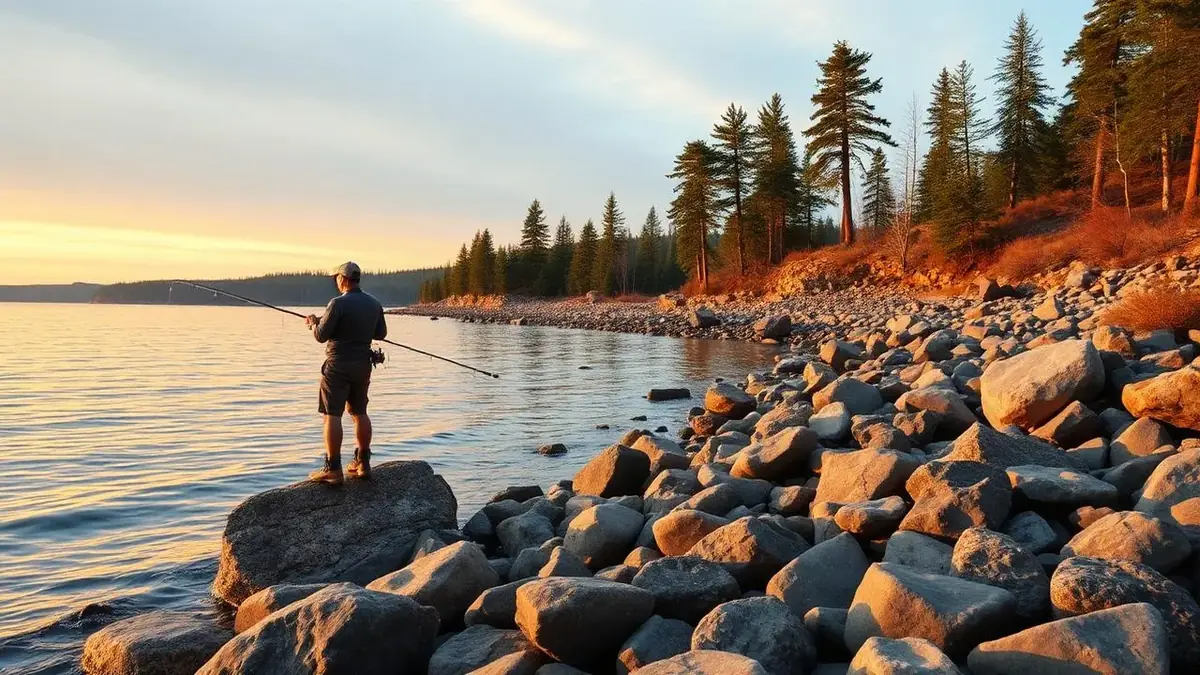
Top 10 Shore Fishing Locations in Ontario
Your Complete Bank Angler's Guide — No Boat Required.
Species Guides
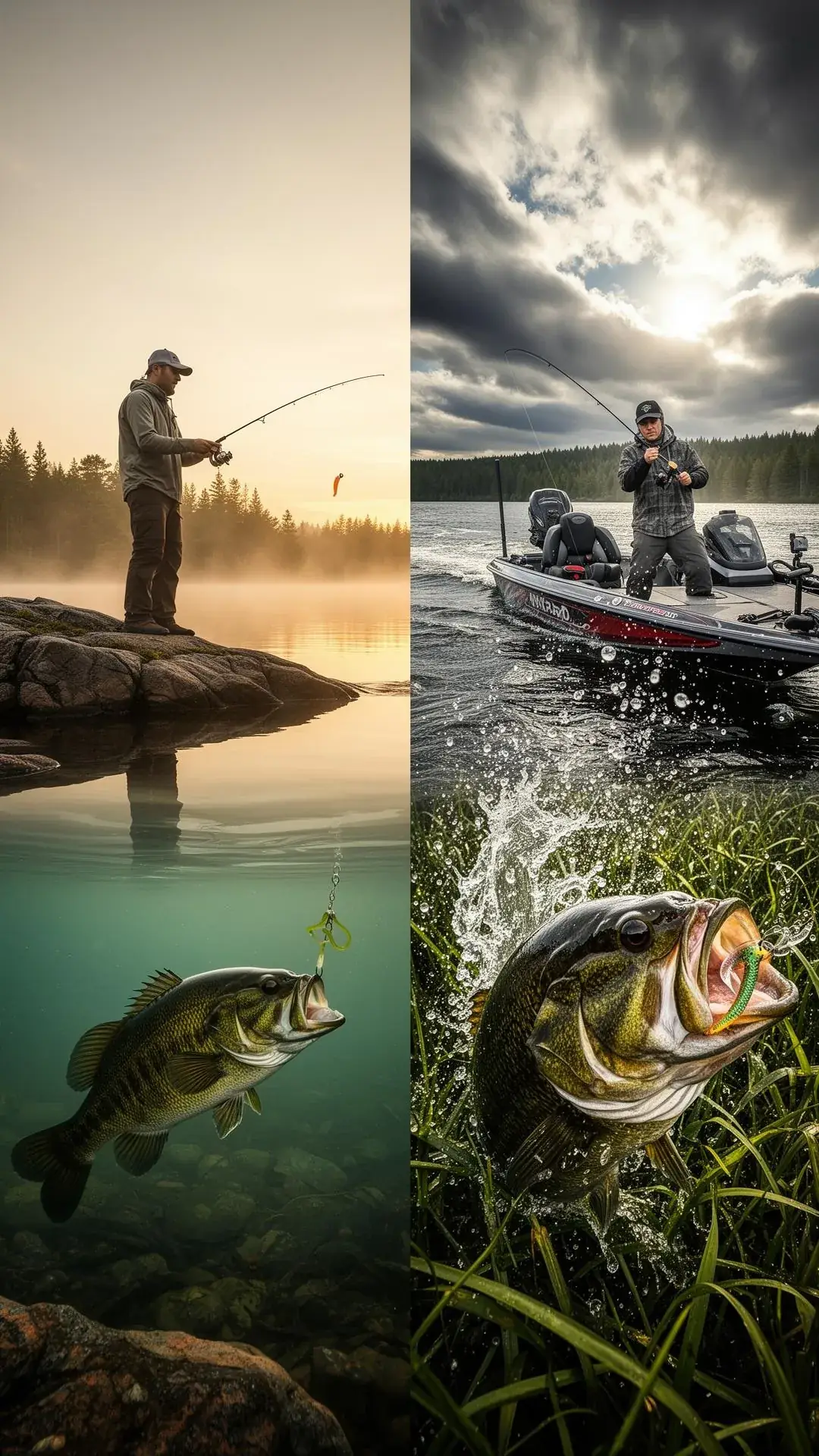
Read the Water, Then Read the Fish: Finesse vs. Power Fishing in Ontario
Both approaches catch fish. The skill lies in reading conditions — clarity, pressure, weather, mood — and knowing which one fits the day in front of you.
Species Guides
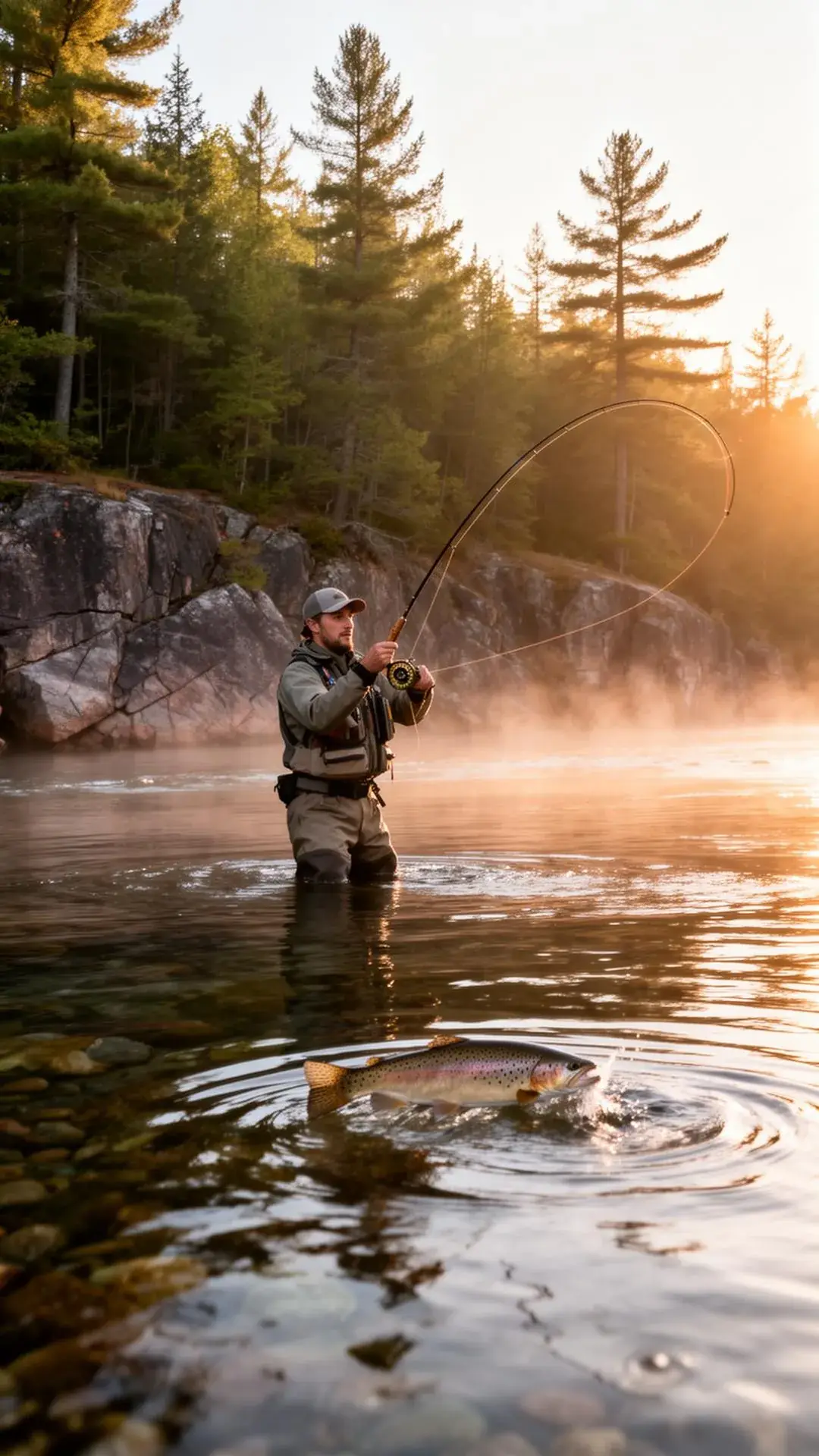
Fly Fishing Ontario: The Complete Guide to Casting Across the Province
From Algonquin brookies to Georgian Bay steelhead — species, rivers, techniques, flies, gear, and seasons for fly anglers across Ontario.