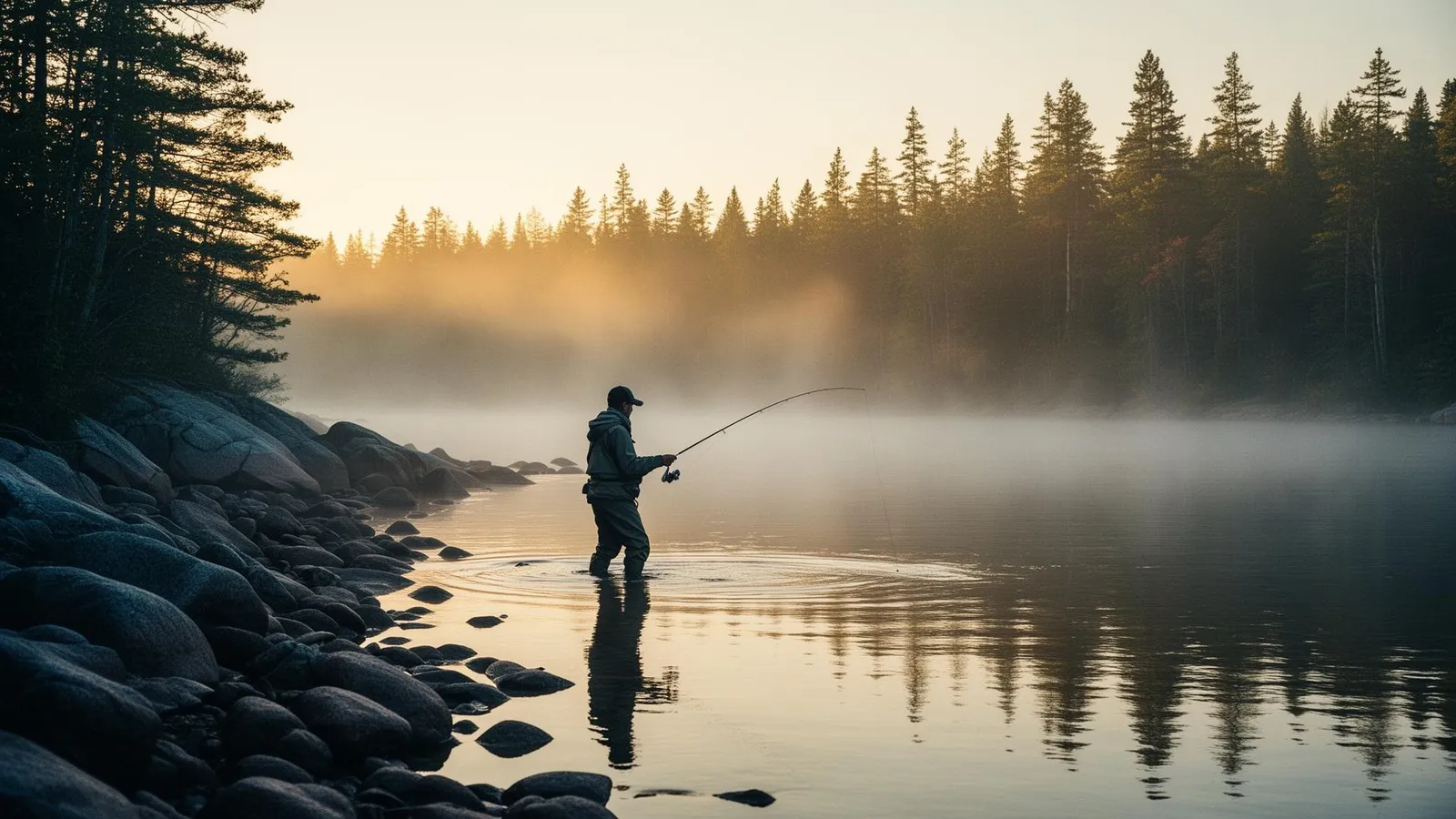
There's a moment every Ontario angler knows. You've found the spot — a rocky shoal on a Canadian Shield lake, maybe a weedbed off a Muskoka bay — and the fish are there, you can see them on the graph. But they won't bite. You've thrown everything in the box. So what do you reach for next?
The answer, more often than not, comes down to a choice that divides fishing camps, tournament boats, and weekend warriors alike: do you slow down and finesse them, or do you speed up and force the issue?
Both approaches catch fish. Both have days where they're unbeatable. The difference lies in knowing which one fits the day in front of you — and in Ontario's endlessly varied lakes and rivers, reading that correctly is half the battle.
Power fishing is exactly what it sounds like. You're covering water fast, using large, aggressive lures — crankbaits, spinnerbaits, swimbaits, chatterbaits — designed to trigger reaction strikes. The idea is to locate active, aggressive fish and put a bait in front of them before they have time to think. It's search fishing: cast, retrieve, move on. Cover a point, a shoreline, a whole bay, in the time it might take a finesse angler to thoroughly work one log.
Finesse fishing operates at the opposite end of the spectrum. Lighter line, smaller baits, slower presentations. A drop shot with a slender four-inch worm. A Ned rig inching along a gravel bottom. A shaky head worked in place for an uncomfortably long time. The goal isn't a reaction — it's convincing a skeptical fish that what it's looking at is an effortless, safe, irresistible meal.
Neither technique is inherently superior. What matters is matching the approach to the conditions, and in Ontario, those conditions change constantly.
Ontario in early summer is power fishing country. From ice-out through June, as water temperatures climb and bass, walleye, and pike move shallow to feed aggressively, covering water quickly is your edge. Fish are chasing. They want to eat. A fast-moving crankbait banged off a rocky point, or a spinnerbait burned over a shallow weedbed, puts bait in front of more fish in an hour than any finesse approach could match.
The same logic applies when fish are pushing bait. Watch for terns working over open water, or surface commotion near the deep edge of a weedline. Those are active, hunting fish, and an aggressive, fast-moving bait that mimics a fleeing shad or perch will get eaten instantly. A slow finesse presentation will be ignored — it doesn't match the energy of what's happening below the surface.
Stained or murky water also favours the power approach. When visibility drops, fish rely more heavily on their lateral line to detect vibration. A crankbait with a tight wobble, a bladed jig that thumps, or a Colorado-blade spinnerbait that pulses hard sends a signal through the water column that finesse baits simply can't replicate. In Georgian Bay's tannin-stained river mouths or the darker bays of Lake Nipissing after a heavy rain, power lures find fish that a worm on a shaky head never would.
Wind is another power-fishing ally. A good chop breaks up surface light, reduces visibility, and emboldens fish to move aggressively. Ontario anglers will tell you that some of the best bites of the season come on two-foot waves off an exposed Shield point. In those conditions, a subtle finesse presentation gets lost. A noisy, vibrating crankbait does not.
Post-frontal conditions are where finesse earns its reputation. After a cold front blows through — a common event across Ontario from May through September — barometric pressure rises sharply, skies go blue and clear, and fish shut down. They drop deeper, hug cover tightly, and become almost impossible to provoke into a reaction strike. Aggressive, fast-moving baits sail past them without a second look.
This is the moment to slow everything down. A drop shot worked vertically over a rocky hump. A small tube jig dragged slowly along a granite ledge. A finesse jig crawled through the dark shade under a dock. These presentations stay in the strike zone longer, look non-threatening, and give a reluctant fish time to commit.
Clear water demands the same discipline. Ontario's Shield lakes are famous for it — gin-clear water where fish can inspect a lure from ten feet away and find every reason not to bite. In high-clarity conditions, heavy line and big lures are visible, unnatural, and alarming. Drop down to eight-pound fluorocarbon, tie on a small natural-coloured soft plastic, and present it slowly enough that even a suspicious fish can rationalize eating it.
Heavily pressured water is the third finesse trigger. Tournament circuits run across many of Ontario's most popular lakes, and even without organized competition, popular fisheries like Lake Simcoe, the Kawartha Lakes, and the Bay of Quinte see enormous angling pressure throughout the season. Fish in these systems have been caught and released on crankbaits and spinnerbaits enough times to develop a real wariness around fast-moving presentations. Drop shot and Ned rig fishing, both still relatively subtle in their adoption across Canadian recreational fishing circles, can be genuinely revelatory on waters where every other angler is throwing a chatterbait or a tube.
Ontario's geography adds another layer to the decision. The Canadian Shield dominates the central and northern part of the province — hard rock, clear water, deep structure, steep drop-offs. This is smallmouth country, and smallmouth, more than almost any other Ontario species, reward the angler who can read their mood correctly. Early morning on a Shield lake in July? Power fish those points and rocky shoals with a topwater plug or a fast crankbait. Midday when the sun climbs high and the fish drop down? Switch to a finesse approach, go lighter, go slower, go deeper.
Walleye fishing across northern Ontario — Lake of the Woods, Eagle Lake, Lake Nipigon — often follows a similar rhythm. In low-light periods, walleye are active and will chase. Blade baits, jigging spoons, and crankbaits at speed catch fish. In bright midday conditions, or in the post-frontal lulls that plague walleye anglers, a lighter jig with a soft plastic, worked slowly along bottom, will often be the only thing they'll look at.
Pike and muskie, Ontario's top-end predators, lean heavily toward power approaches by nature — they're ambush hunters wired to respond to large, fast-moving prey. But even pike, on tough days in bright flat-calm conditions, can be taken on lighter presentations in shallow bays when every bucktail and large soft bait has been ignored.
The most effective Ontario anglers don't plant a flag in either camp. They use power fishing to locate fish — covering water, identifying productive structure, reading where the fish are and how active they seem — and then use finesse techniques to maximize catches once a pattern is found. Start with a crankbait to find the depth and structure fish are using. Once you've identified the zone, slow down. Work it thoroughly. The fish you didn't trigger with the power bait are still there.
The reverse works too. A finesse bait can reveal where fish are sitting, and sometimes switching to an aggressive power presentation once you know exactly where they're holding will trigger strikes that the slow approach can't generate.
The real skill isn't committing to a technique — it's reading the conditions quickly enough to switch when one stops working, and not stubbornly throwing the same lure because it worked yesterday.
Before you tie on your first lure of the day, run through these questions:
- Water temperature: Above 18°C, fish metabolism is high and reaction strikes are more likely. Below that, slow down.
- Sky and pressure: Overcast skies and stable or falling pressure favour power fishing. Post-frontal bluebird skies almost always call for finesse.
- Water clarity: Stained or murky water, go power and create vibration. Clear water, go finesse and go light.
- Time of day: Low light (early morning, late evening, overcast midday) favours aggressive presentations. Bright midday sun usually calls for a slowdown.
- Fishing pressure: If the water gets a lot of traffic, fish have likely seen every power bait in existence. A finesse approach can give you a real edge.
- Your read of the fish: If you're marking fish aggressively near the surface or chasing bait, power up. If they're suspended, deep, or hugging structure tightly, slow down.
Ontario fishing is never one-size-fits-all. The lake you fished last weekend is different from the one you'll fish next. The fish that crushed a crankbait Tuesday morning may want nothing to do with it Thursday afternoon. Anglers who understand finesse and power fishing as complementary tools — and who can switch between them fluidly — will consistently outfish those who've committed to a single style.
The fish will tell you what they want. Your job is to listen.
Tight lines.
More fishing near Georgian Bay
Topic Hub
Bass Fishing Ontario
Everything you need on this topic
Related Articles
Seasons
The Ultimate Summer Fishing Guide for Ontario Anglers
What's biting, where to find them, how to fish them, and what gear to bring for every major summer species in Ontario.

Fishing Spots
Georgian Bay Fishing Guide: Ontario's Ultimate Big-Water Adventure
Granite shorelines, the 30,000 Islands, and trophy fish across nearly every major Ontario species.

Fishing Spots
Fishing Ontario's Provincial Parks: A Province-Wide Guide to Casting in Protected Waters
From Algonquin's brook trout to Wabakimi's walleye — how to fish Ontario's best-protected, least-pressured waters.