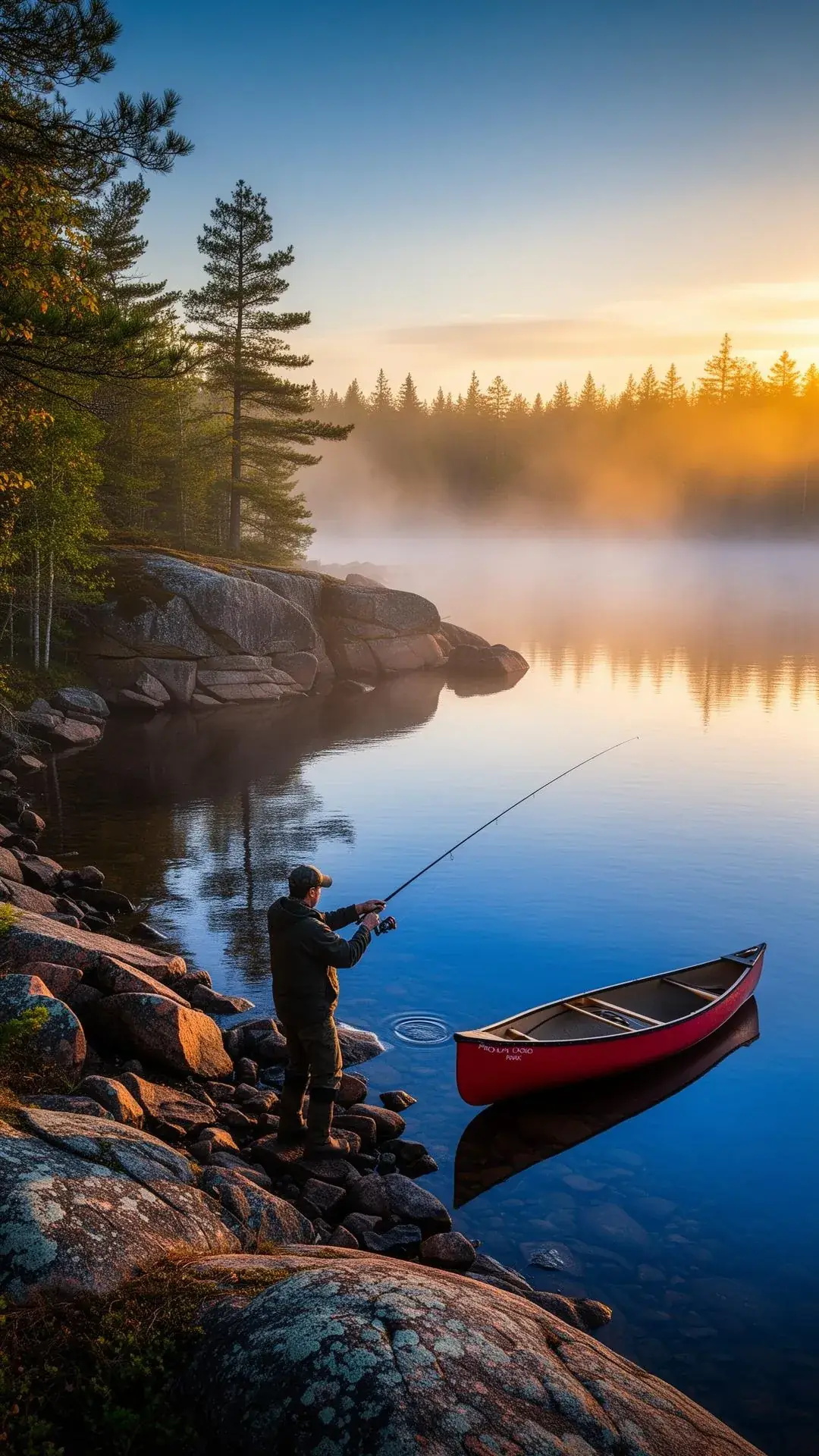
Ontario anglers talk a lot about lures, weather fronts, and moon phases — but the single biggest factor driving where fish are and how aggressively they'll bite is water temperature. Fish are cold-blooded, so their metabolism, digestion, and activity level are all tied directly to the temperature of the water around them. Learn to read it, and you'll spend a lot less time guessing.
Unlike mammals, fish can't regulate their own body heat — it matches the water they're in. That means temperature controls how much they need to eat, how fast they can process a meal, and even how hard they're willing to fight for one. A fish sitting in water outside its comfort zone will often shut down and barely feed at all, no matter how good your presentation is.
As Ontario lakes shed their ice, water temperature becomes the whole game. Walleye are typically the first major species to spawn, moving when the water warms to roughly 38–40°F, with the peak of spawning activity occurring in the 42–50°F range. Fishing is usually slow during the spawn itself, but the pre-spawn staging period — when fish gather near river mouths, shoals, and current seams waiting for the right temperature — can be excellent.
Bass follow a similar but later pattern. Smallmouth bass tend to see their best pre-spawn feeding windows once water hits roughly 48–55°F, with actual spawning activity concentrated between 55 and 60°F. Largemouth bass run a touch warmer, generally spawning once temperatures reach the 62–75°F range.
Once a lake fully warms up, it stratifies into layers — warm water on top, a rapid temperature transition zone called the thermocline, and cold, oxygen-rich water below. Every species has a temperature band it prefers, and in summer, that band often sits at a specific depth rather than a specific spot on the map.
Walleye are most comfortable in water between 55°F and 70°F, and in summer this often means fishing water in the 16°C to 21°C range (roughly 61–70°F), which may be 20 feet down or more depending on the lake.
Smallmouth bass key in on 65–75°F water when they're most active and feeding heavily, while largemouth push into slightly warmer water, with activity peaking as temperatures climb into the 70s and around 80°F.
Northern pike and muskie are far less tolerant of heat than most anglers assume. Larger pike in deep lakes will follow the thermocline down to find cooler water in the 16–21°C range even when the rest of the lake is much warmer. Because these fish handle heat and low oxygen poorly, most guidelines recommend avoiding targeting pike and muskie once water temperatures exceed 75°F, since fish caught and released in hot water face a real risk of delayed mortality even if they swim away looking fine.
Lake trout retreat to the coldest layer of the lake once summer sets in. They prefer the colder water below the thermocline, where oxygen is also higher — the same zone favoured by baitfish like cisco. On electronics, this thermocline often shows up as a distinct hazy band roughly 20 to 35 feet down.
As surface water cools in autumn, it eventually matches the temperature of the deeper water, and the thermocline collapses in a process called fall turnover. Once that layering disappears, nothing stops surface water from mixing with the depths — meaning warmwater fish like walleye, smallmouth, pike, and muskie can now roam into deep water, while coldwater fish like lake trout and whitefish can come shallow. This is why fall fishing patterns can feel scattered and unpredictable compared to the well-defined depth bands of summer.
Muskie behaviour shifts noticeably around this time too: once water temperature permanently drops below about 60°F, muskies tend to abandon their summer home ranges and wander until temperatures fall to around 40°F, when they settle into winter locations.
Cold water doesn't mean no fishing — it means a different approach. Once water temperatures drop below 10°C (50°F), walleye tend to feed less often and more selectively, favouring smaller, easier prey that doesn't require much effort to catch. The same logic applies across species in cold water: slow your presentation down and downsize your bait.
| Species | Spawning Temp | Peak Activity / Feeding Temp | Summer Behaviour |
|---|---|---|---|
| Walleye | 42–50°F (migration ~38–40°F) | 55–70°F | Lethargic below 50°F; summer holds 61–70°F, often 20+ ft down |
| Smallmouth Bass | 55–60°F | 65–75°F | Feeds heavily 65–75°F; slows below 50°F |
| Largemouth Bass | 62–75°F | 70s, peaking near 80°F | More heat-tolerant than smallmouth; active in warmer water |
| Northern Pike | — | ≤ 65°F most active | Follows thermocline to 61–70°F; avoid targeting above 75°F |
| Muskie | — | ≤ 65°F most active | Same heat sensitivity as pike; abandons summer range below ~60°F |
| Lake Trout | — | Coldwater specialist | Below the thermocline all summer, often 20–35+ ft down |
You don't need a marine biology degree to use this — you need a thermometer (many fish finders have one built in) and a bit of patience. Before you set up on a spot, check the temperature. If it's outside a species' comfort range at the surface, don't assume the fish aren't there — assume they've moved to the depth where the water matches what they want. Chase the temperature band, not just the structure, and you'll find fish far more consistently across an Ontario season.
- Why Fish Stop Biting — How weather, pressure and conditions shut a bite down.
- Reading Structure in Ontario Waters — Pair temperature with structure to find fish faster.
- Ontario's Ultimate Fishing Guide 2025–2026 — Lake-by-lake breakdowns for the Big Four species.
- The Ultimate Summer Fishing Guide for Ontario — Seasonal tactics for peak summer conditions.
Topic Hub
Walleye Fishing Ontario
Everything you need on this topic
Related Articles
Seasons
The Ultimate Summer Fishing Guide for Ontario Anglers
What's biting, where to find them, how to fish them, and what gear to bring for every major summer species in Ontario.
Regulations
Eating the Fish You Catch in Ontario: What You Actually Need to Know
There is no province-wide 'safe' or 'unsafe' lake — here's how Ontario's Guide to Eating Ontario Fish actually works, and how to check your catch before dinner.
Fishing Spots
Top 10 Crown Land Hot Spots Every Ontario Angler Should Know
Free camping, unpressured water, and true wilderness — ten Ontario Crown land regions where you can cast a line without ever seeing another boat.