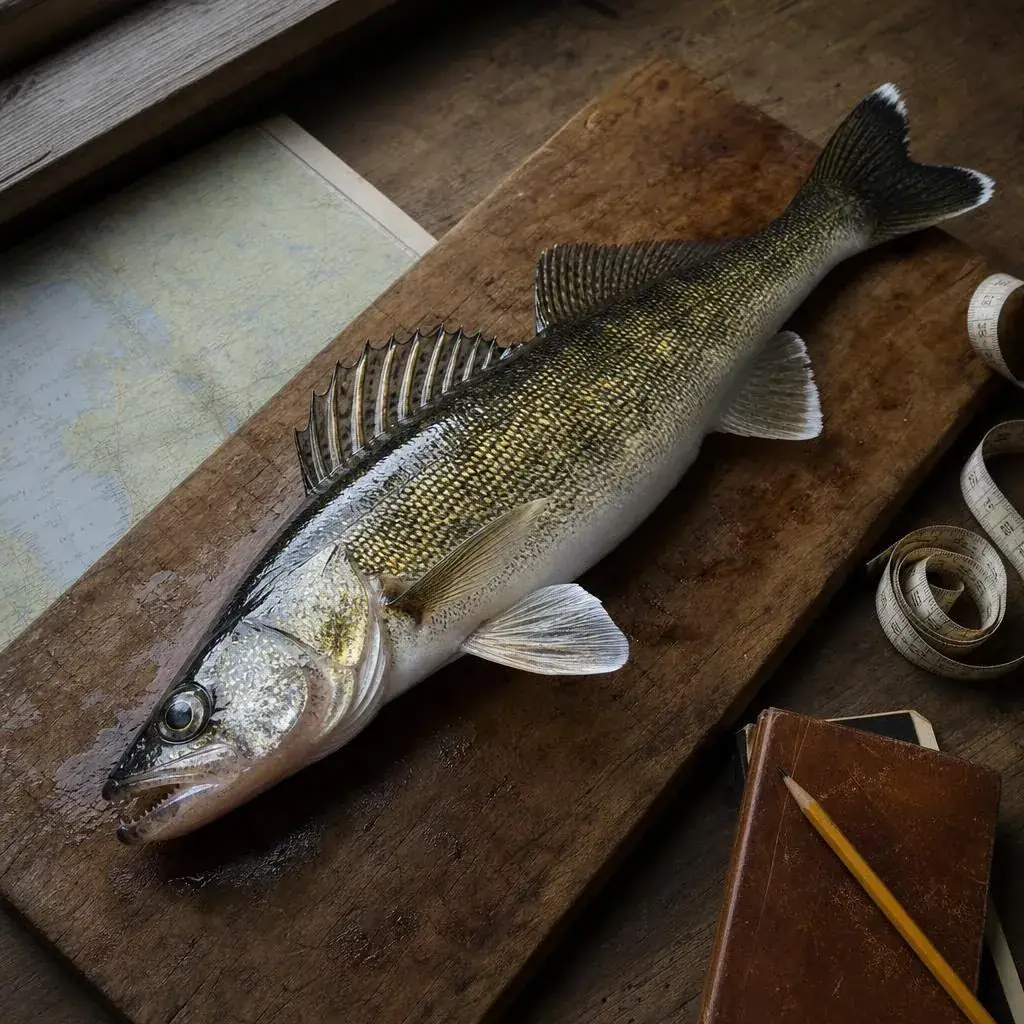
Walk into any tackle shop in Ontario and you'll be confronted with walls of lures, hooks, lines, and gadgets in every size, colour, and price point imaginable. It's easy to walk out either overwhelmed and empty-handed, or with a bag full of things you didn't need and missing the few things you did.
Whether you're packing your first tackle box or doing a spring overhaul of one that's been collecting rust since last fall, here's a practical, Ontario-focused checklist covering what actually belongs in your box — and why.
Before getting into the tackle itself, a word on rods. If you're building a setup from scratch, a medium-action spinning rod in the 6'6" to 7' range, paired with a 2500–3000 size spinning reel, is the most versatile combination available. It handles panfish, trout, walleye, bass, and smaller pike without issue — genuinely a do-it-all setup for most Ontario freshwater situations.
As you progress, it's worth adding specialty rods: an ultralight (4'6"–5'6") for trout and panfish where finesse and feel matter, and a medium-heavy 7-footer for pike and walleye jigging where backbone counts. If river fishing for steelhead or trout calls to you, a fly rod opens up an entirely different — and rewarding — side of Ontario fishing.
Monofilament (8–10 lb) remains the best starting point for most anglers. It's forgiving, has manageable stretch that helps prevent pulled hooks, and is inexpensive and easy to find at any Ontario tackle shop or Canadian Tire.
Braided line (20–30 lb) paired with a fluorocarbon leader (12–15 lb) is the upgrade for pike, muskie, and heavy cover fishing. Braid cuts through weeds rather than getting fouled in them, while the fluorocarbon leader prevents bite-offs from sharp-toothed predators and remains nearly invisible underwater — useful for wary fish in clear Shield-lake water.
Fluorocarbon (10–12 lb) on its own is worth having for finesse presentations where sensitivity matters — drop shots, jigs, and any technique where detecting a subtle bite makes the difference between a hookup and an empty hook.
A proper hook assortment is one of the cheapest, most overlooked parts of a tackle box. Here's the range that covers Ontario's common species:
- Sizes 8–10 for panfish (perch, crappie, bluegill) — small mouths need small hooks
- Sizes 4–2 for walleye — a versatile middle range for jigs, live bait rigs, and harnesses
- Sizes 1/0–3/0 for bass and pike — large enough to hold up to bigger fish and bigger baits
- Circle hooks (size 2–2/0) for live bait — fewer gut-hooked fish and easier, safer releases
Split shot (BB to 3/8 oz) handles the vast majority of weighting situations, while bell or egg sinkers (1/4 to 1 oz) cover bottom-fishing setups for walleye and catfish.
Here's where Ontario anglers need to pay attention to regulations: it is illegal to use or possess lead fishing sinkers or jigs in Canada's national parks and national wildlife areas. This rule exists because loons and other wildlife ingest lead sinkers and jigs while feeding, mistaking them for food or grit, and lead toxicity is a leading cause of mortality in common loons in Canada.
Outside of national parks and wildlife areas, lead sinkers and jigs remain legal in most of Ontario as of this writing — but rules can change. Tin, bismuth, steel, and tungsten weights are widely available, cost only marginally more, and perform identically. An average Canadian angler loses 11 to 15 jigs and sinkers per year to snags — adding up to roughly 460 tonnes of lead entering Canadian waterways annually.
Inline spinners are one of the most versatile lures in any tackle box, effective on everything from crappie to muskie. For walleye, pike, and perch, spinners and spinner harnesses are deadly, particularly when tipped with worm or a minnow.
If you could only carry one type of lure, make it jigs. A selection in the 1/8 to 3/8 oz range, in white, chartreuse, and black, covers an enormous range of situations and is particularly effective for walleye. Heavier jigs earn their place on windy days when wave action makes it harder to maintain bottom contact.
Spoons are built for casting and retrieving with action — for pike, cast toward shallow weedy bays and retrieve so the spoon skims just over the weeds. Crankbaits and jerkbaits (Rapala-style) cover most situations from shallow weed flats to deeper rocky structure. For bass, a topwater popper is one of the most exciting lures in the box.
Northern Pike and Muskie: Both species demand a steel or heavy fluorocarbon leader — their teeth will cut through standard line without one. Muskie anglers should come prepared for patience — the often-cited "10,000 casts" rule isn't far from the lived experience of many dedicated muskie hunters.
Crappie and Panfish: Scale everything down. Size 8–10 hooks, small baits (worms, leeches, waxworms), and a simple bobber setup remain remarkably effective — and it's hard to beat for introducing a new angler to the sport.
Walleye: Jigs and spinner harnesses are the foundation, but don't overlook live bait presentations — minnows and crawler harnesses give you options when the fish are being particular.
- Needle-nose pliers — the single most important tool in any tackle box, for safely removing hooks and handling toothy fish
- Line cutters or clippers — quick lure changes and trimming frayed line, a common cause of lost fish
- Bobbers/floats — a mix of slip floats (adjustable for depth) and fixed floats (simple, shallow water)
- Snap swivels (size 7–10) — fast lure changes and prevent line twist with spinners and spoons
- A landing net — essential for safe, efficient catch-and-release on larger fish
- Your valid Ontario fishing licence and Outdoors Card — always
- Sunscreen and bug spray — blackflies and mosquitoes are relentless in the north and in spring
- An extra layer — weather on Georgian Bay and other large waters can shift quickly
- Snacks and water — more trips end early from dehydration than anyone admits
You don't need to buy everything on this list in one trip. Most experienced Ontario anglers built their tackle collection over seasons, adding pieces as they encountered situations their existing gear couldn't handle. Start with the fundamentals and build outward from there.
The best tackle box isn't the fullest one. It's the one that matches how, where, and what you actually fish for in Ontario. Always check current Ontario fishing regulations at ontario.ca before heading out, particularly around lead tackle restrictions and barbless hook requirements in specific waters.
Topic Hub
Bass Fishing Ontario
Everything you need on this topic
Related Articles
Gear Reviews
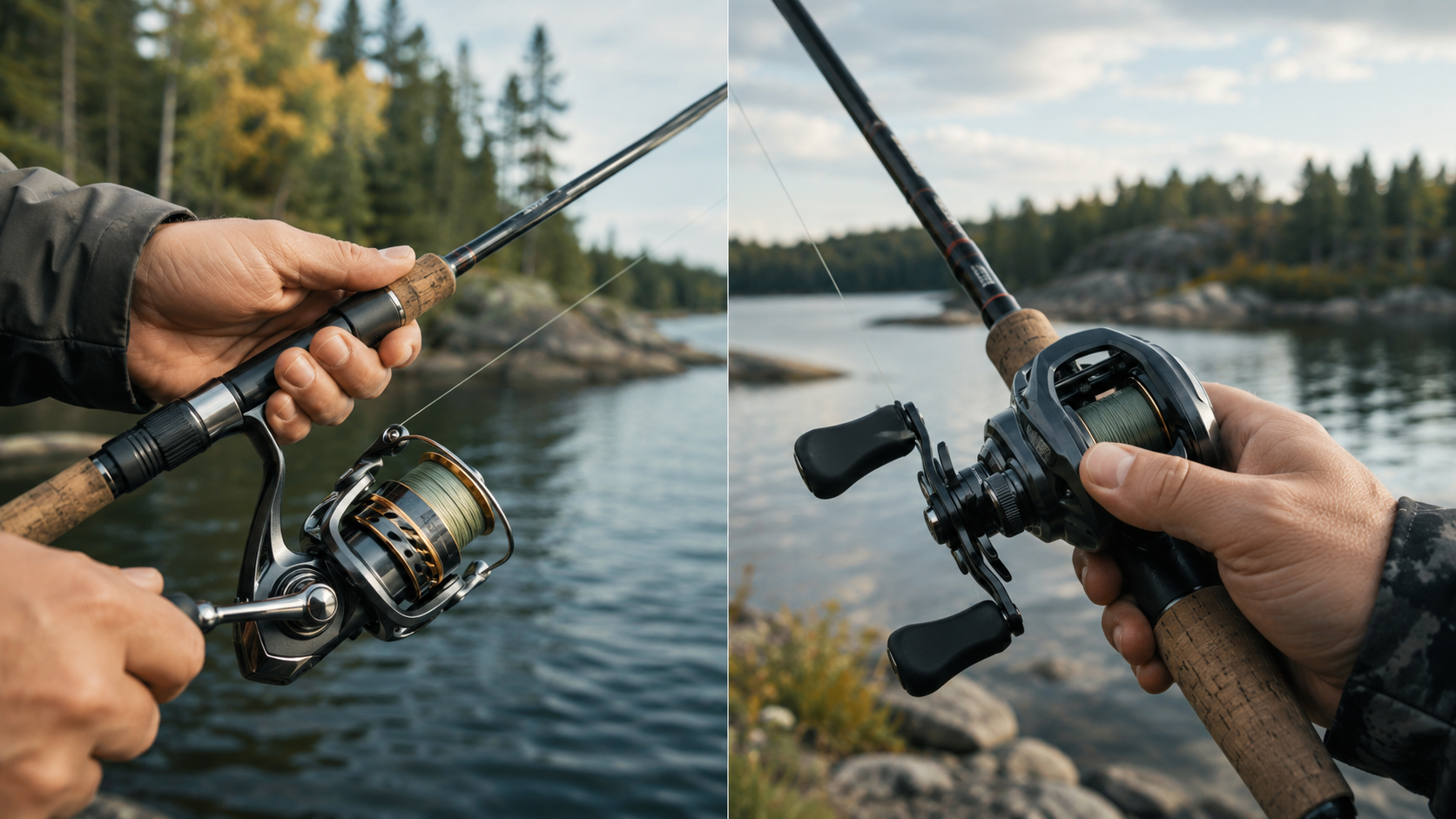
Spinning Reel vs. Baitcasting Reel: Which Is Right for Your Ontario Fishing?
How each reel actually works, the honest pros and cons of both, and the best-reviewed spinning reels and baitcasters for walleye, bass, pike and muskie water.
Gear Reviews
How to Read a Fish Finder: A Beginner's Guide
Sonar cones, arches, bottom hardness and screen settings — decoded so a modern fish finder stops being noise and starts putting you on fish.

Seasons
The Ultimate Summer Fishing Guide for Ontario Anglers
What's biting, where to find them, how to fish them, and what gear to bring for every major summer species in Ontario.