If you've stood in the tackle aisle at Bass Pro in Vaughan or your local tackle shop wondering whether to grab a spinning reel or a baitcaster, you're not alone. It's the most common gear debate in fishing, and for Ontario anglers chasing walleye on Lake Simcoe, smallmouth on Georgian Bay, or pike and muskie in the Kawarthas, the "right" answer really depends on what you're fishing for and how much practice you're willing to put in.
This guide breaks down how each reel works, the real pros and cons of both, and which specific models are earning the best reviews from field-testers and everyday anglers right now — no guesswork, no invented specs.
Spinning reels hang below the rod. The spool is fixed and doesn't rotate when you cast; instead, a wire bail spins around it to lay line back on retrieve. Because the spool stays still during the cast, there's very little chance of the line overrunning itself.
Baitcasting reels sit on top of the rod, with the spool mounted in-line with the rod and rotating as line pays out. This gives you direct control over lure placement and casting distance, but if the spool spins faster than the lure is flying, the line piles up on itself — a tangle anglers call a backlash, or "bird's nest."
- Beginner's Guide to Fishing — Start here if this is your first setup.
- Fishing Knots & Rigging — The knots that hold up on braid and fluoro.
Pros:
- Far easier learning curve — most beginners can cast accurately within an afternoon
- Little to no backlash risk, even in wind or with light lures
- Excels with light lines and finesse presentations (great for finicky walleye and pressured smallmouth)
- Ambidextrous — the handle can be swapped for left- or right-hand retrieve
- Ideal for live bait and light jigs, both staples of Ontario walleye fishing
- Cons: line twist can build up over time, especially with monofilament
- Cons: harder to cast heavy lures or heavy line with precision
- Cons: less "cranking power" for muscling big fish out of heavy cover
- Cons: casting accuracy under wind or around obstacles isn't as refined as a well-tuned baitcaster in skilled hands
- Walleye Species Guide — Where finesse spinning gear shines.
- Lures & Presentations — Ned rigs, drop shots and light jigs.
Pros:
- Superior accuracy for pitching and flipping into cover — critical for pike and bass around weed edges and docks
- Handles heavier lines and lures far more comfortably, which matters for muskie and big pike gear
- Less line twist, since the spool rotates in the same direction the line is released
- More cranking power and torque for horsing fish out of heavy vegetation
- Can cast farther with heavier lures once you're dialed in
- Cons: steeper learning curve — backlash is a real and frustrating hazard for beginners
- Cons: requires thumb control on the spool throughout the cast
- Cons: struggles with very light lures and finesse presentations compared to spinning gear
- Cons: generally pricier at the performance end of the market
- Muskie & Pike Species Guides — Heavy gear, heavy cover.
- Finesse vs. Power Fishing — When to downsize and when to muscle fish.
Rather than guessing, here's what's actually earning strong marks from dedicated gear reviewers who fish these reels hard — including Wired2Fish, which puts new reels through real on-water testing every season, and independent gear writers at outlets like Whiskey Riff.
- Daiwa Certate HD LT — Best Overall. Reviewers call this one of the smoothest spinning reels on the market, built with a one-piece monocoque aluminum body and Daiwa's MagSealed technology to keep water and grit out of the bearings and main shaft. It's rated highly for everything from finesse bass presentations to fish that make hard runs, like walleye and pike — a genuine multispecies option for Ontario anglers who don't want to buy three different reels. It's a premium reel, so expect a premium price tag.
- Shimano Stradic FM — Best All-Purpose. The Stradic has been a go-to for serious anglers for years, and the latest FM version is praised for its redesigned drag system, lighter feel in hand, and better sealing against water intrusion. For an Ontario angler jigging for walleye all day or working a drop-shot for smallmouth, that consistency matters.
- Lew's Speed Spin CRX — Best Reel Under $100. A standout budget pick, built with a graphite body, carbon skeletal rotor, and a 9-to-10 bearing system depending on size. It's specifically praised for finesse presentations like Ned rigs, making it a strong choice for light jigs on Ontario's clear-water lakes.
- Piscifun Viper X — Best True Budget Reel. Consistently flagged as a favourite for crappie and panfish anglers: light, casts light jigs well, and typically sells for under $50. It's a direct-to-consumer brand, so it skips traditional retail markup — reviewers note the lineup is a mixed bag overall, but this model punches above its price.
- Lew's Speed Spool RX — Best Overall. The reel reviewers point to first for an all-around baitcaster. Its ParaMag RX magnetic braking system minimizes backlash while still allowing long, accurate casts with both fluorocarbon and braid. One-piece aluminum frame, under 7 ounces — reviewers compare it to "the Toyota Hilux of bass fishing": not flashy, just dependable.
- Shimano SLX XT A — Most Affordable / Best Workhorse. Built for anglers who fish often but won't spend $400 on a reel. SVS Infinity braking gives solid cast control, and the rigid aluminum HAGANE body handles hard use season after season. A strong pick for bass and pike on a budget.
- Abu Garcia Revo SX VoltIQ — Best Cast Control. Abu Garcia's first digital braking system uses a battery-free electronic brain to monitor spool speed in real time and micro-adjust mid-cast. Reviewers highlight how well it handles lightweight or weightless baits in wind — a genuine advantage on gusty Great Lakes open water.
- Okuma Hakai DT — Best Finesse Baitcaster. Under 6 ounces, one of the lightest baitcasters tested, with a magnesium alloy frame that's rare at this price. Extremely "free" casting — it takes time to dial the brakes in, but once tuned it offers excellent distance for finesse-style casting.
- Central Ontario Fishing Spots — Kawartha and Muskoka water to test both setups.
- Live Fishing Intel — Wind and water temps before you pick a rod.
| Situation | Better Choice |
|---|---|
| Jigging for walleye | Spinning |
| Live bait fishing | Spinning |
| Panfish and crappie | Spinning |
| New angler / kids fishing | Spinning |
| Pitching jigs into pike or bass cover | Baitcasting |
| Muskie and big pike gear | Baitcasting |
| Windy, open-water casting with light baits | Either — modern digital-brake baitcasters (like the VoltIQ) now compete well here |
| Finesse presentations (Ned rigs, drop shots) | Spinning, though bait-finesse (BFS) baitcasters are closing the gap |
There's no universally "better" reel — only the better tool for what you're doing. If you're new to fishing, targeting walleye, or working finesse presentations, a spinning reel will get you catching fish faster with far less frustration. If you're pitching jigs into heavy cover for bass and pike, or you want more control and power for bigger fish, it's worth investing the time to learn a baitcaster.
Most serious Ontario anglers end up owning both — a spinning setup for finesse and light-line work, and a baitcaster for power presentations and precision casting around cover. Start with whichever matches how you fish most often, and build your tackle box from there.
Sources: field reviews and testing data referenced from Wired2Fish's 2026 spinning reel and baitcasting reel buyer's guides, and Whiskey Riff's 2026 top reel roundups. Specs and pricing are current as of testing dates and may change — always check current listings before buying.
🎁 Top-Rated Spinning Reels
Daiwa Certate HD LT — Best Overall
Monocoque aluminum body with MagSealed protection; smooth enough for finesse work and tough enough for hard-running walleye and pike.
View on Daiwa →
Shimano Stradic FM — Best All-Purpose
Redesigned drag, lighter in hand and better sealed — the do-everything reel for jigging walleye and drop-shotting smallmouth.
View on Sail →
Lew's Speed Spin CRX — Best Under $100
Graphite body, carbon skeletal rotor and a 9–10 bearing system; a favourite for Ned rigs and light jigs on clear water.
View on Amazon →
Piscifun Viper X — Best True Budget Reel
Light, casts small jigs well and usually lands under $50 — a crappie and panfish favourite.
View on Amazon →
🦺 Top-Rated Baitcasting Reels
Lew's Speed Spool RX — Best Overall
ParaMag RX magnetic braking, one-piece aluminum frame, under 7 oz. Dependable all-rounder for pitching jigs into cover.
View on Lew's →
Shimano SLX XT A — Most Affordable / Best Workhorse
SVS Infinity braking and a rigid HAGANE aluminum body — hard-use durability without the flagship price.
View on Sail →
Abu Garcia Revo SX VoltIQ — Best Cast Control
Battery-free digital braking micro-adjusts mid-cast; excels with light baits in Great Lakes wind.
View on Abu Garcia →
Okuma Hakai DT — Best Finesse Baitcaster
Under 6 oz with a magnesium alloy frame; very free-spooling once the brakes are dialed in.
View on Okuma →
Topic Hub
Walleye Fishing Ontario
Everything you need on this topic
Related Articles
Gear Reviews
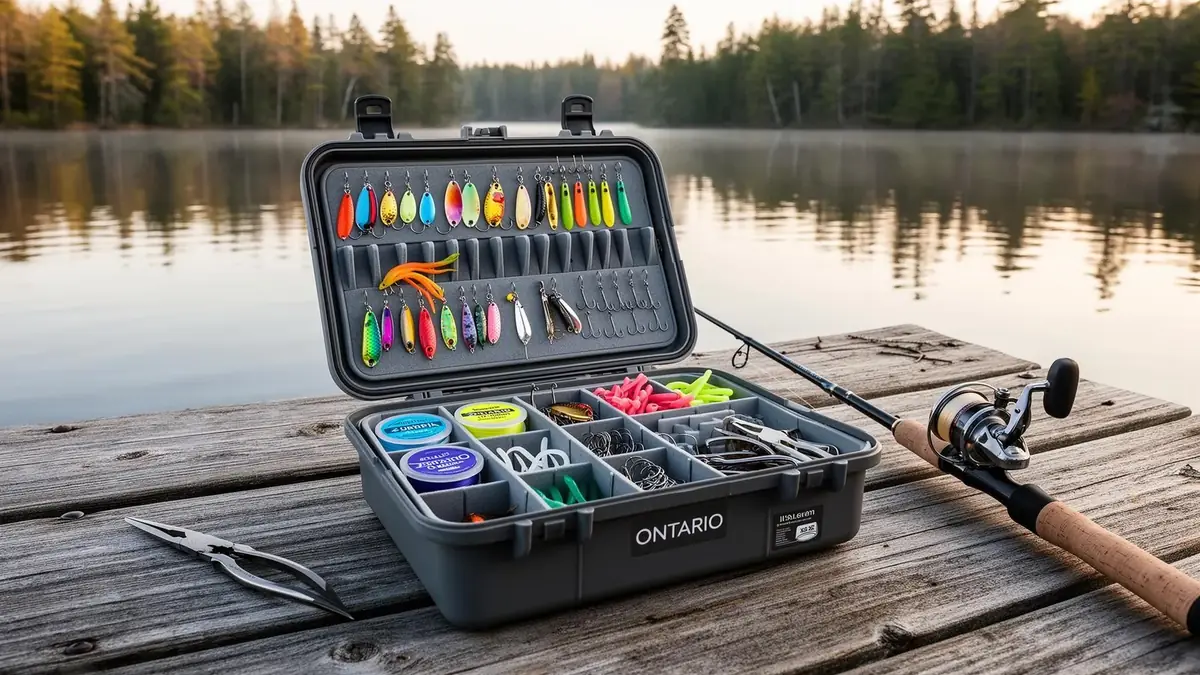
The Ultimate Ontario Tackle Box Checklist
A practical, Ontario-focused list of the rods, lines, hooks, lures, and tools that actually belong in your box — and why.
Species Guides
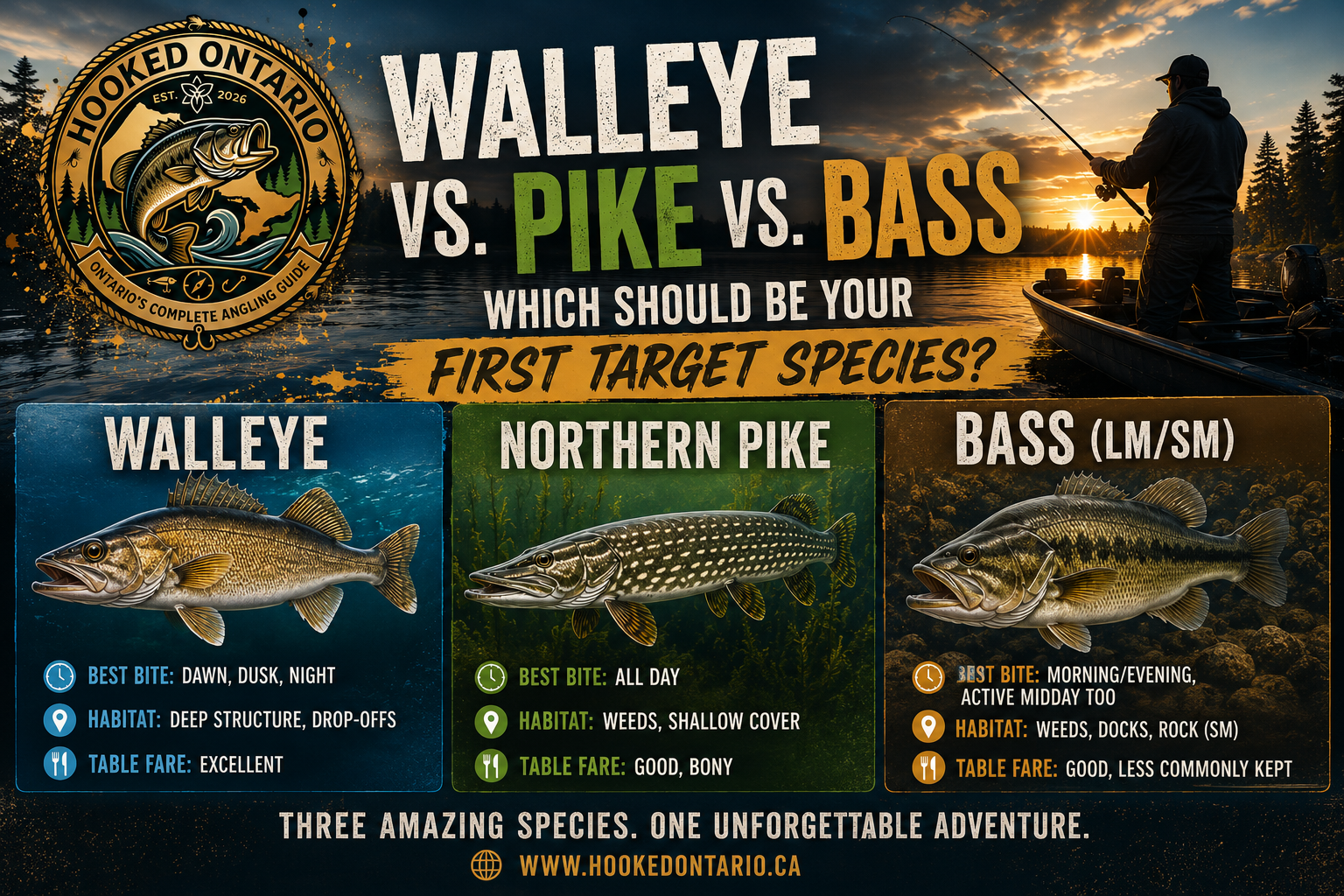
Walleye vs. Pike vs. Bass: Which Should Be Your First Target Species in Ontario?
An honest beginner's breakdown of Ontario's big three — difficulty, bite windows, habitat, gear needs and table fare — so you pick the right species to learn on.
Species Guides
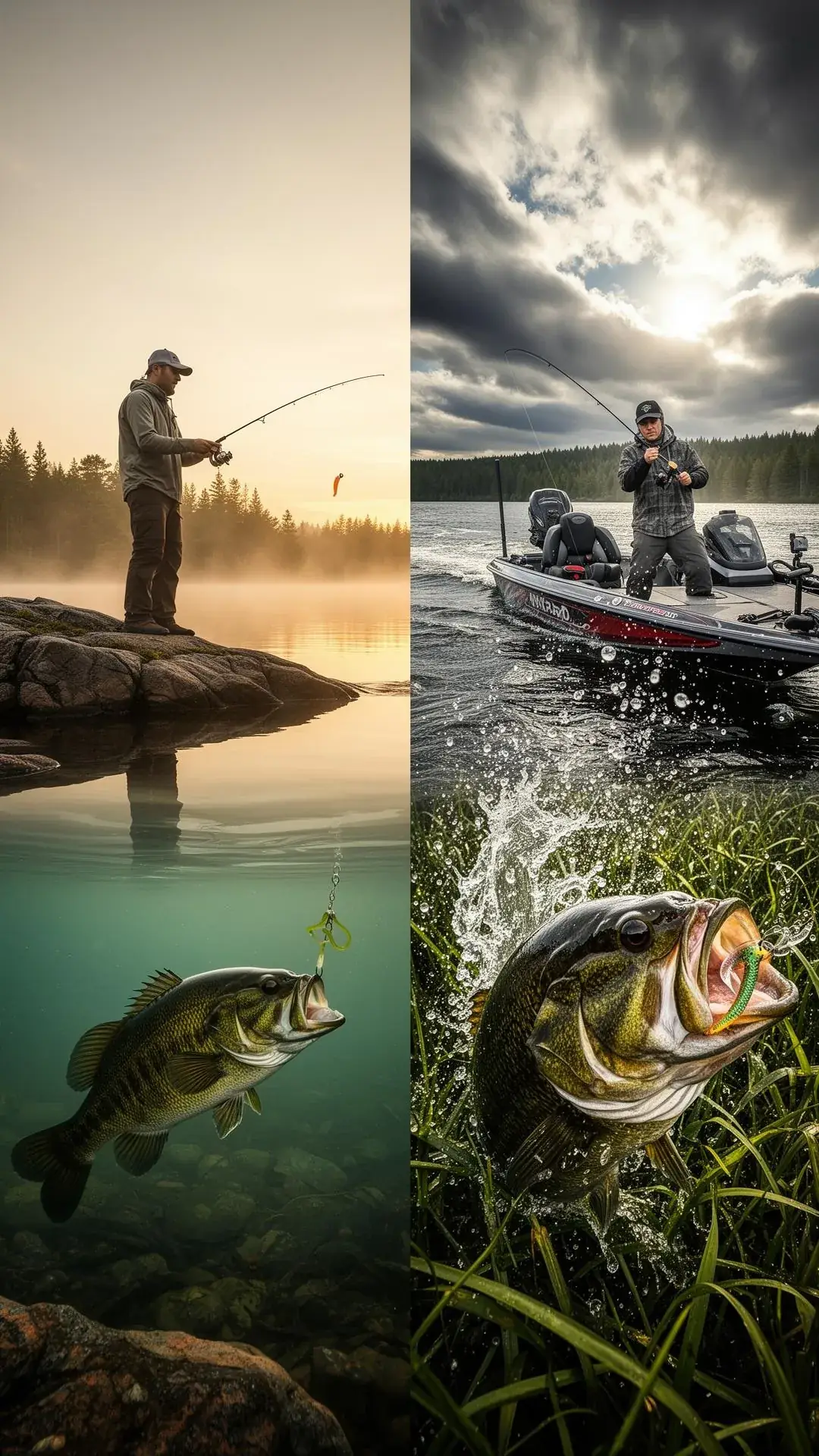
Read the Water, Then Read the Fish: Finesse vs. Power Fishing in Ontario
Both approaches catch fish. The skill lies in reading conditions — clarity, pressure, weather, mood — and knowing which one fits the day in front of you.