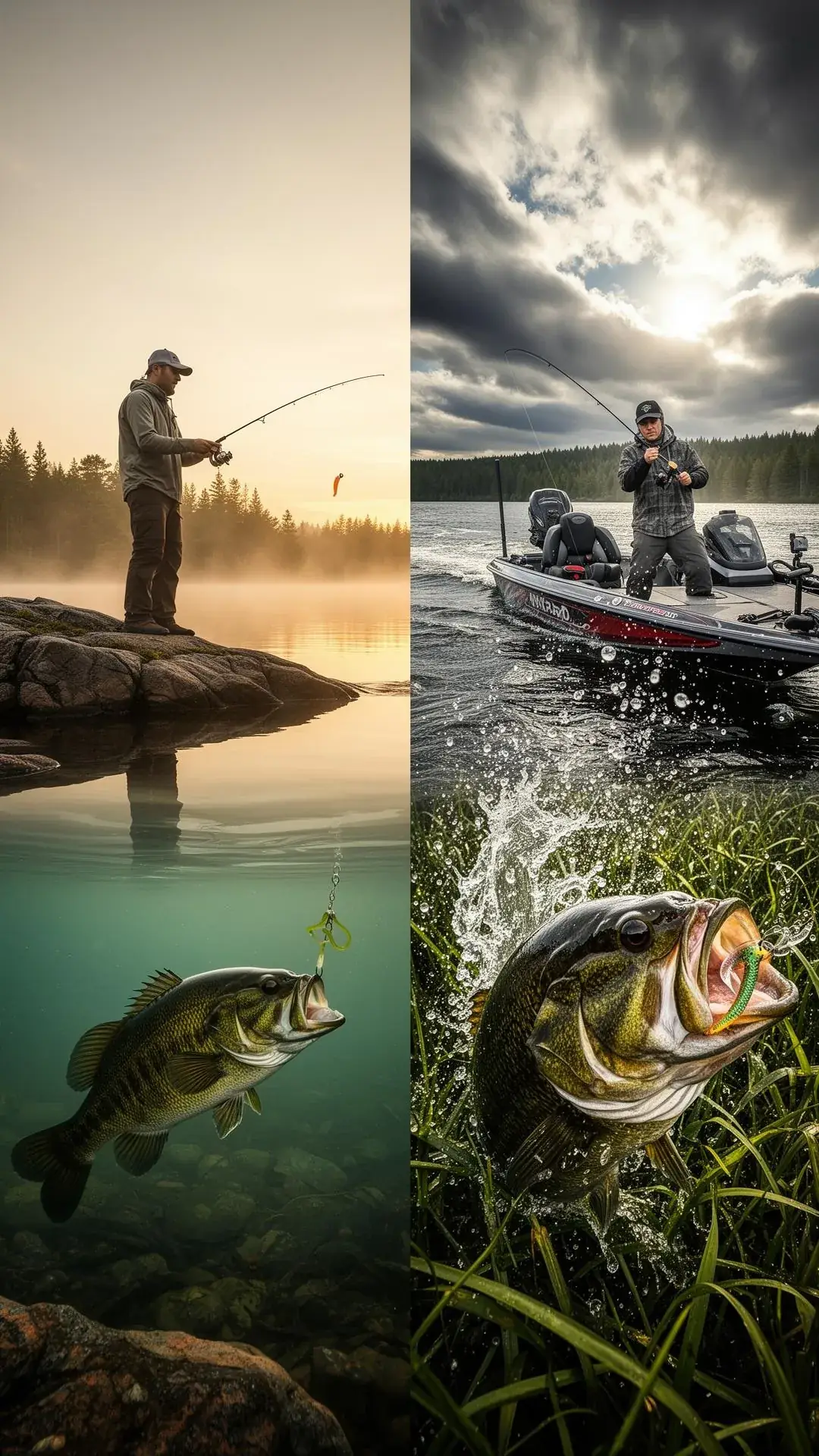
Walleye (Sander vitreus), frequently referred to by Ontario anglers as the 'Golden Ghost,' are the province's most sought-after game fish. Known for their exquisite flavor and challenging behavior, they are a cornerstone of the Canadian angling heritage.
Success in walleye fishing begins with understanding their unique biological traits and seasonal movements.
- Low-Light Vision: Large, glassy pupils gather light in dark or murky water — a predatory advantage at dawn, dusk and on overcast days.
- The 'Walleye Chop': Windy days reduce light penetration and often trigger aggressive feeding in shallower depths.
- Bottom Dwellers: If your lure isn't occasionally touching bottom or weed tops, you're fishing too high.
Ontario holds approximately 20% of the world's fresh water, providing a lifetime of opportunity across diverse lake and river systems.
| Waterbody | Why It's Famous | Best Season |
|---|---|---|
| Lake Erie | World's most productive walleye fishery (Western Basin). | Spring & Summer |
| Bay of Quinte | Globally renowned for trophy 'greenback' walleye from Lake Ontario. | Autumn |
| Lake Nipissing | Premier open-water and ice fishing destination. | Winter & Spring |
| French River | Legendary spring spawning runs and Canadian Shield scenery. | Spring |
| Lake Simcoe | Accessible for GTA anglers; top winter perch and walleye. | Winter |
- Spring (Great Awakening): After spawning, walleye feed shallow — night fishing near shorelines is exceptional.
- Summer (Dog Days): Fish move to the thermocline (15–25 ft) or deep structure like sunken humps.
- Autumn (Harvest): Cooling water triggers gorge-feeding on deep drop-offs; use larger, calorie-dense lures.
- Winter (Silent Vigil): Vertical jig small spoons or jigs with live bait at dawn and dusk.
- Rod: 6'6"–7'0" Medium-Light spinning rod for sensitivity plus hookset backbone.
- Line: 8–10 lb test; braided main line with a fluorocarbon leader is standard.
- Jigs: Lead-head jigs tipped with minnows, nightcrawlers or plastic twister tails.
- Crankbaits: Deep-diving stickbaits trolled at 1.5 mph along weed edges.
- Worm Harnesses: Highly effective for summer trolling behind bottom bouncers.
- Size Limits: Many zones enforce a 15-inch (~38 cm) minimum.
- Catch Limits: Often 6 (Sport) or 2 (Conservation) — varies by region.
- Sanctuaries: Spring spawning sanctuaries close all fishing until specific dates.
Topic Hub
Walleye Fishing Ontario
Everything you need on this topic
Related Articles
Species Guides
Hooked Ontario: The Ultimate Angler's Field Guide
A Professional Manual for Species Identification, Strategy, and Technical Success
Species Guides
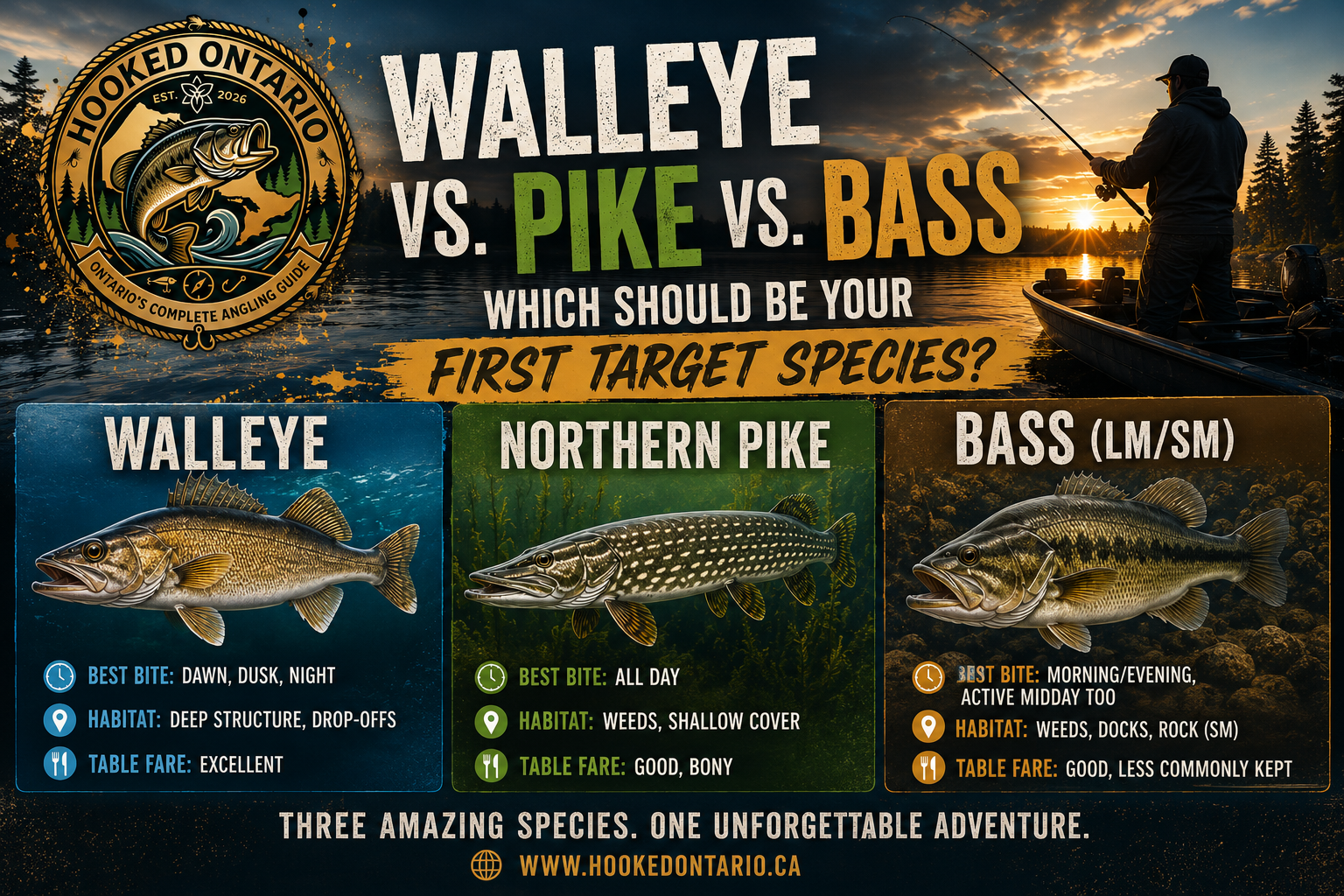
Walleye vs. Pike vs. Bass: Which Should Be Your First Target Species in Ontario?
An honest beginner's breakdown of Ontario's big three — difficulty, bite windows, habitat, gear needs and table fare — so you pick the right species to learn on.
Species Guides
How Water Temperature Shapes Ontario Fishing (And How to Use It to Your Advantage)
Fish are cold-blooded — learn to read water temperature and you'll spend a lot less time guessing where they are and how they'll bite.