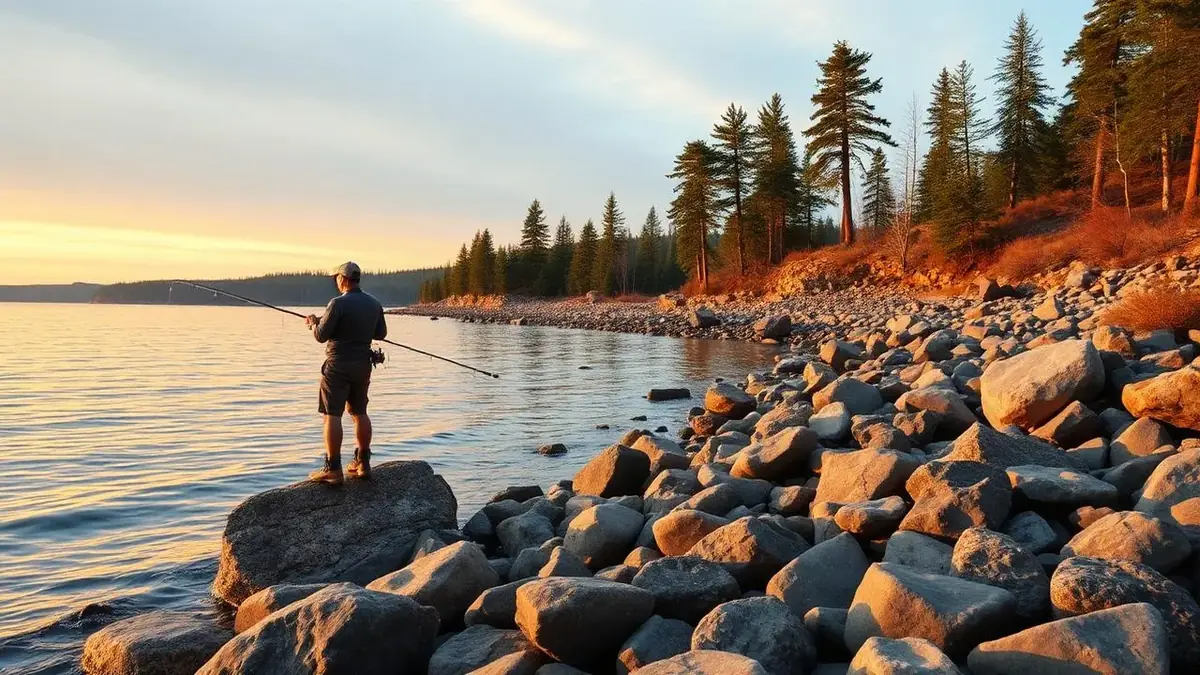
Lake Nipissing is a massive lake in Ontario, covering over 873 square kilometers. Even though it is very large, it is surprisingly shallow, with an average depth of only 4.5 meters (about 15 feet). Because it is so shallow, the water warms up quickly in the spring, which tells the walleye (also called 'pickerel') that it is time to move toward the rivers to lay their eggs.
To catch these fish successfully while keeping the lake healthy, you need to understand how they move, what they eat, and the rules for keeping them.
Lake Nipissing is like a big, shallow bowl. Because it isn't deep, the wind can easily stir up the water and create currents. These currents are important because they move food around and help the walleye decide where to wait before they spawn.
The lake is fed by several big rivers — the Sturgeon, South, and Veuve — and flows out through the French River. These rivers are the main destinations for walleye in the spring.
| Detail | Measurement | Why it Matters |
|---|---|---|
| Size | 873.3 km² | Lots of room for many fish. |
| Average Depth | 4.5 m (15 ft) | Warms up fast, starting the spring run early. |
| Deepest Spot | 64 m (210 ft) | Where fish hide in the winter. |
| Main Rivers | Sturgeon, South, Veuve | The 'nurseries' where fish go to spawn. |
Walleye are cold-blooded, so their energy depends on the water temperature. When the water is freezing, they stay deep and don't move much. As the water warms up to about 3.3°C (38°F), they start waking up and get hungry.
- Under 4°C (40°F): Fish are slow and sleepy. They stay in deep water.
- 6°C to 8°C (43–47°F): Best time for fishing — fish move shallow and feed actively.
- 7°C to 9°C (44–48°F): Spawning window. They usually stop eating for a short time.
Walleye don't just swim randomly. They follow a specific path from deep winter water to shallow spring spawning areas.
- Winter Holes: They start in deep water (15 to 45 feet deep).
- The First Drop-Off: As they move shallow, they stop at the first big ledge in the lake floor.
- Rest Stops: They wait at points of land or 'inside turns' where the shore curves inward.
- River Mouths: Finally, they gather where rivers meet the lake before heading upstream.
- Sturgeon River: A popular spot near Sturgeon Falls. Fish wait in Cache Bay before moving into the river current.
- South River: Holds two types of walleye — resident (darker) fish and migratory fish from the main lake.
- French River: The lake's outflow — rockier and deeper, often producing the largest fish.
To make sure there are always enough walleye for the future, there are strict rules about which fish you can keep.
- Keep Zone: Walleye between 40 and 45 cm (15.7–17.7 in).
- Small Fish: Anything under 40 cm must be released to grow and spawn.
- Big Fish: Anything over 45 cm must be released — these are the prime egg-layers.
- Limits: Sport Licence — 2 fish. Conservation Licence — 1 fish.
- Closed Season: March 16 until the Friday before the third Saturday in May.
In the cold water of early spring, walleye are lazy. They won't chase fast lures, so you have to fish slowly.
- Jigging: Most popular method. Use a heavy jig tipped with a live minnow.
- Subtle Movement: Lift an inch or two and let it sit. Sometimes dead-sticking is best.
- Colors: In Nipissing's stained water, chartreuse, orange, and pink stand out best.
- The 'Walleye Chop': A light wind hides the boat and pushes fish shallow.
- Cloudy Days: Walleye have light-sensitive eyes — overcast and drizzly days are prime time.
- Yellow Perch: Abundant in Nipissing — they move shallow in spring and walleye follow.
- Emerald Shiners: Where you see schools of these near shore, walleye are right behind them.
| Area | Launch Name | Notes |
|---|---|---|
| Sturgeon Falls | Federal Dock | Easy access to the Sturgeon River. |
| North Bay | La Vase River | Very busy in spring; great for drifting. |
| Callander | Public Marina | Good for the east side of the lake. |
| Lavigne | Lavigne Dock | Access to the northwest part of the lake. |
| West Arm | Sucker Creek | Good ramp for the rocky west end. |
- Watch Out: Nipissing is shallow and full of hidden rocks and stumps — run carefully, especially in spring.
- Handle with Care: Release oversized or undersized fish quickly — cold air can damage gills fast.
- No Barbs: Pinch barbs to make releases easier and safer for the fish.
More fishing near Lake Nipissing
Topic Hub
Walleye Fishing Ontario
Everything you need on this topic
Related Articles
Seasons
The Ultimate Summer Fishing Guide for Ontario Anglers
What's biting, where to find them, how to fish them, and what gear to bring for every major summer species in Ontario.
Fishing Spots
Best Ontario Lakes for Walleye Fishing in July
Where to point your boat this month — reefs, humps, deep weed edges and the province's top summer walleye water
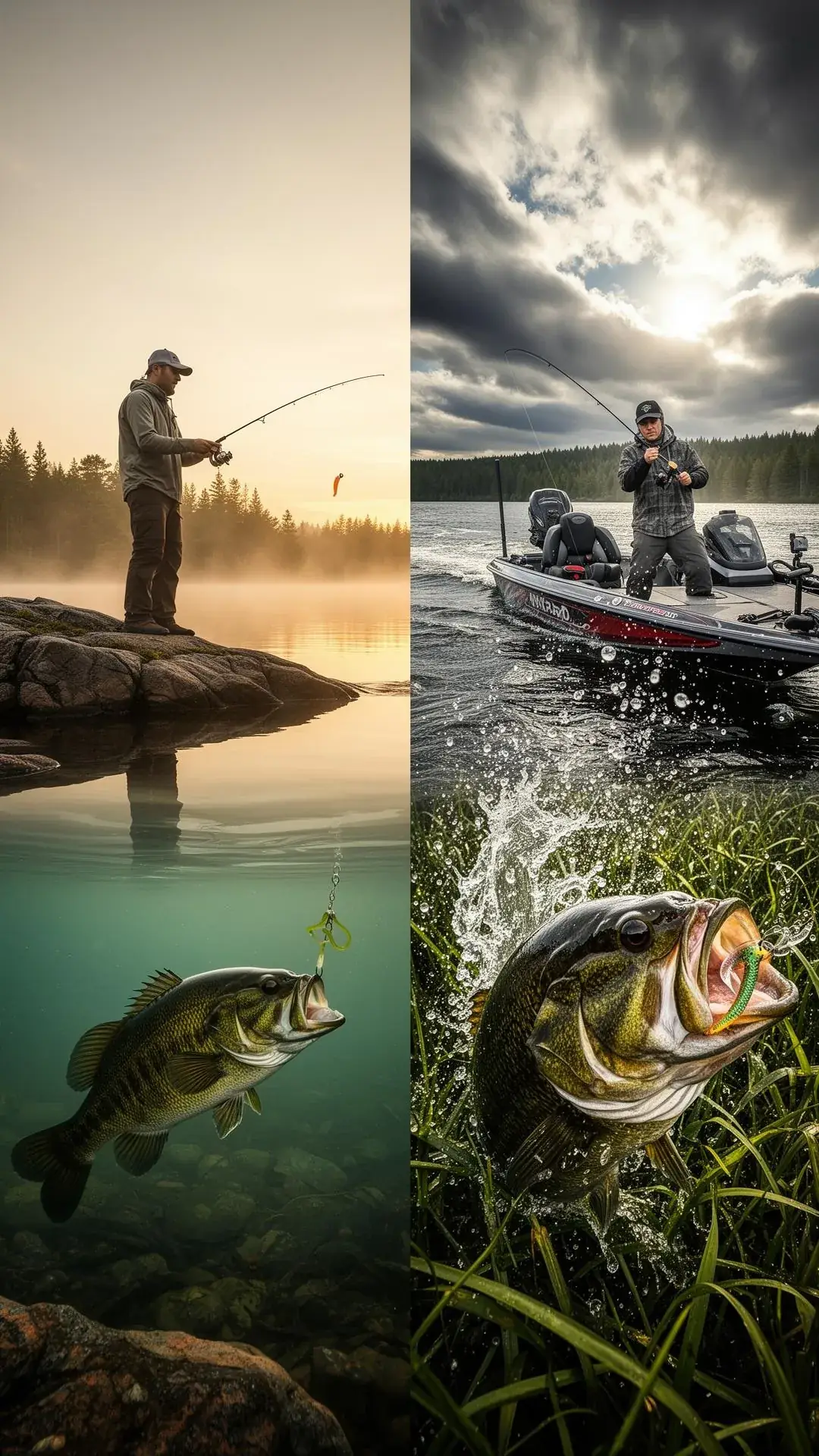
Species Guides
Read the Water, Then Read the Fish: Finesse vs. Power Fishing in Ontario
Both approaches catch fish. The skill lies in reading conditions — clarity, pressure, weather, mood — and knowing which one fits the day in front of you.