If you've ever pulled out the Ontario Fishing Regulations Summary and wondered why walleye season opens on a different date two hours down the highway, or why your buddy's lake has a smaller catch limit than yours, the answer comes down to one thing: Fisheries Management Zones, or FMZs.
FMZs are the backbone of how Ontario manages its recreational fisheries, and understanding them makes you a sharper, more informed angler. Here's what they are, why they matter, and how you can be part of the system.
Ontario is divided into 20 Fisheries Management Zones, numbered FMZ 1 through FMZ 20, stretching from the Far North down to Lake Ontario. Each zone groups together lakes, rivers, and streams that share similar characteristics — things like climate, watersheds, road access, and how heavily anglers use the area.
The zones replaced the province's old "Fishing Divisions" system. Instead of one-size-fits-all rules for the whole province, FMZs let the Ministry of Natural Resources tailor regulations — catch limits, seasons, size limits — to what each specific region of water actually needs.
A few zones contain water bodies so significant they get their own dedicated management outside the normal zone process. Lake Nipissing and Lake Simcoe are two examples — they're called "provincially significant inland fisheries" and receive extra-close monitoring and planning attention.
Fish populations aren't uniform across a province as large and geographically varied as Ontario. A northern lake trout lake in FMZ 5 faces completely different pressures than a bass fishery in FMZ 17's Kawartha Lakes, or the massive multi-species fishery in Lake Ontario's FMZ 20 — which alone supports a recreational fishery worth more than $100 million a year to the provincial economy.
- Allow more fishing where stocks are thriving, so healthy fisheries aren't held back by overly conservative province-wide rules.
- Protect vulnerable fisheries with tighter limits where populations are stressed.
- Rebuild fish populations that have declined, through targeted regulations or stocking.
- Adjust seasons for climate differences, since ice-out and spawning timing in the north can differ by weeks from the south.
Each FMZ operates on a repeating management cycle: planning objectives and strategies, implementing them through regulation changes and stocking or habitat work, monitoring and reporting on what's actually happening in the water, and evaluating whether the strategies are working before adjusting.
Monitoring is the engine that keeps this cycle honest, and it happens in two main ways. Broad-scale monitoring samples a large number of lakes across a zone every five years, giving a big-picture view of fish populations, aquatic habitat, and fishing pressure. Intensive monitoring digs much deeper into a smaller number of high-priority or heavily-fished lakes, tracking them in detail over the long term.
Together, these programs let fisheries managers spot trends — a walleye population declining, a lake trout fishery under heavy pressure — before they become a crisis, and adjust regulations accordingly.
The Ministry of Natural Resources (MNR) is the government body responsible for FMZs, handling the science, regulation-setting, and monitoring programs. But the ministry doesn't do this alone. Each zone (or cluster of zones) has an FMZ Advisory Council — a group of anglers, scientists, conservation groups, and local community members who provide input into management plans.
- Northwest Ontario (FMZs 4, 5, and 6)
- Northeast Ontario (FMZs 10, 11, and 12)
- The Great Lakes (FMZs 9, 13, 14, 19, and 20)
- Southern Ontario (FMZs 12, 15, 17, and 18)
- Follow zone-specific regulations. Limits and seasons exist because of real data on your zone's fish populations.
- Get involved with your FMZ Advisory Council. Watch for public consultations and surveys.
- Practice catch-and-release and careful fish handling, especially for large, long-lived breeding fish that are slow to replace.
- Report invasive species. Anglers are often the first to spot trouble — report sightings to the Invading Species Hotline at 1-800-563-7711 or through the EDDMapS Ontario app.
- Follow bait rules. Ontario is divided into four Bait Management Zones (BMZs) that restrict moving baitfish and leeches between regions.
- Clean, drain, and dry your boat between water bodies — pull the plug, empty the livewell, and clear off any plants or mussels before moving to a new lake.
- Participate in monitoring where possible. Some zones engage angling clubs to help collect data like scales and fish measurements.
FMZs exist because Ontario's fisheries are too diverse to manage with a single rulebook. By breaking the province into 20 zones — each planned, monitored, and adjusted based on real data and local input — the system aims to keep fish populations healthy while keeping fishing opportunities strong for the long term.
The next time you check regulations before a trip, you're not just looking at arbitrary rules — you're looking at the output of a management cycle built on monitoring data, science, and angler input specific to that stretch of water. Understanding that system, and doing your part within it, is part of being a responsible angler in Ontario.
Sources: Ontario Ministry of Natural Resources (ontario.ca/page/fisheries-management-zones and individual FMZ pages), Ontario Fishing Regulations Summary, and the OFAH/MNR Invading Species Awareness Program (invadingspecies.com).
Related Articles
Fishing Spots
Invasive Fish Species in Ontario: What Every Angler Needs to Know
Ontario's lakes and rivers are under quiet pressure from fish that were never supposed to be here. Here's the guide to established invaders, the ones still knocking at the door, and how anglers can help.
Regulations
Eating the Fish You Catch in Ontario: What You Actually Need to Know
There is no province-wide 'safe' or 'unsafe' lake — here's how Ontario's Guide to Eating Ontario Fish actually works, and how to check your catch before dinner.
Gear Reviews
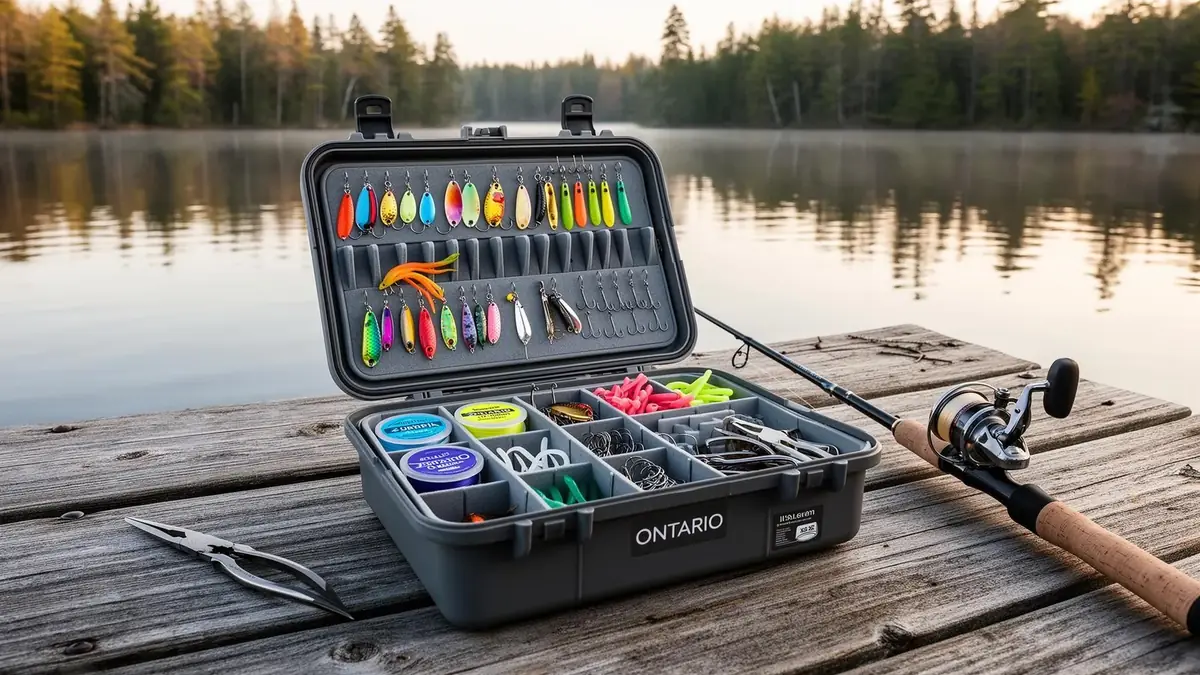
The Ultimate Ontario Tackle Box Checklist
A practical, Ontario-focused list of the rods, lines, hooks, lures, and tools that actually belong in your box — and why.