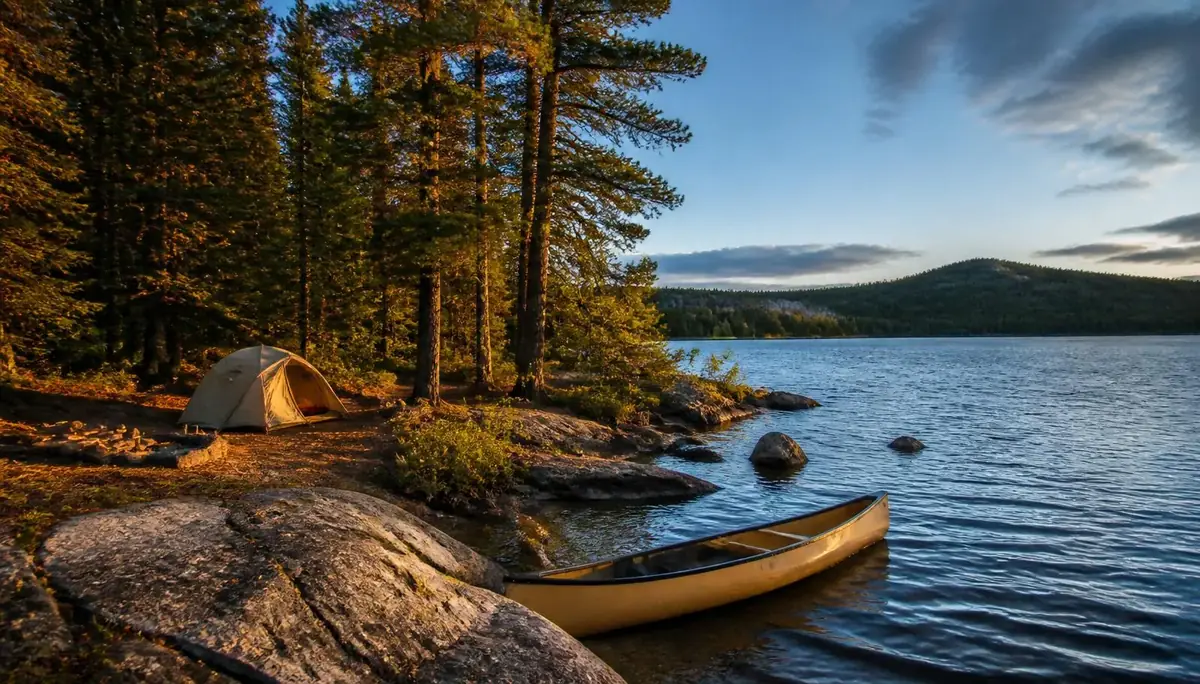
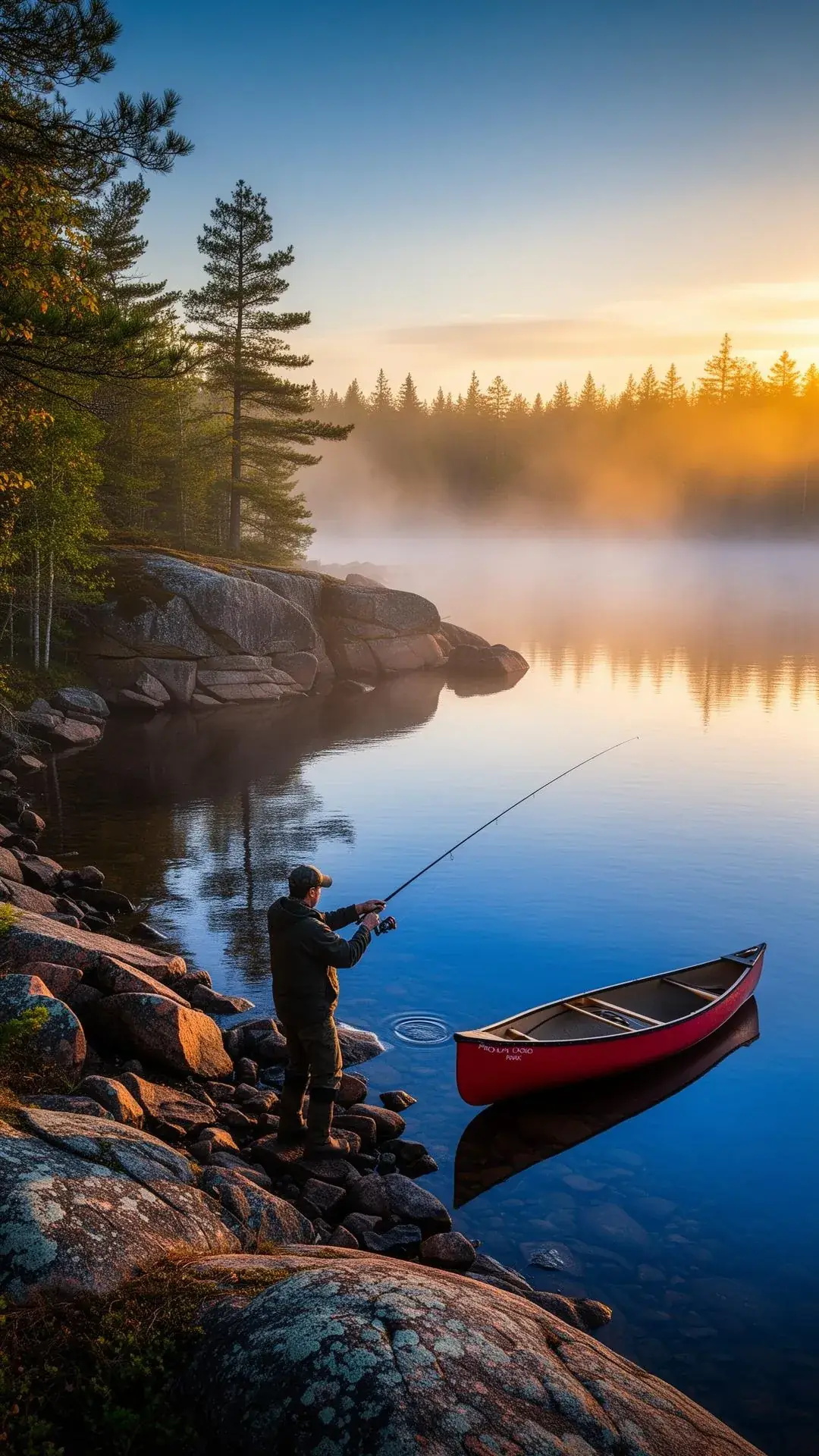
There is a moment every backcountry angler knows. You've been hiking for two hours, portage pack biting into your shoulders, deadfall across the trail, blackflies doing what blackflies do. Then you hear it — the sound of moving water threading through spruce and cedar, cold and insistent, coming from somewhere just off the path. You push through the brush, pull back a branch, and there it is: a dark, tannic stream curling over mossy granite, so clear you can count the pebbles on the bottom. And holding in the seam behind that mid-stream boulder, finning in the current like a jewel dropped by someone careless, is a brook trout.
That's why people do this.
Ontario's backcountry is threaded with thousands of kilometres of streams and creeks that rarely see a boot print, let alone a lure. For those willing to earn it — to swap the boat launch and the dock chair for a topo map and a loaded pack — the reward is some of the finest brook trout fishing in North America. Wild, native brookies. Fish that have never seen a stocked hatchery truck. Fish that hit like they mean it.
Here's how to find them, fish them, and bring a few to hand.
Brook trout are cold-water specialists. In Ontario, they thrive in the clear, oxygen-rich streams of the Canadian Shield — particularly across Algonquin Park, the Temagami region, Killarney, and the vast wilderness north and west of Sudbury. They need water temperatures below 20°C to survive comfortably, and below 16°C to truly thrive. That thermal sensitivity is your first clue: follow the cold.
Headwater streams — the small, spring-fed tributaries that feed into larger river systems — are often your best bet in summer, when warming temperatures push trout upstream into the coldest reaches. Look for streams that flow through mature forest, shaded by old-growth canopy that keeps water temperatures honest even in July. Springs and seeps entering a stream are magnets for brook trout; the incoming water is often several degrees cooler than the surrounding current and carries a constant supply of aquatic insects.
Topo maps and satellite imagery are your pre-trip essentials. Ontario's MNRF (Ministry of Natural Resources and Forestry) publishes fish community data for many waterbodies — cross-reference that with elevation contours to identify streams with significant gradient, which typically means faster, colder, more oxygenated water. Apps like onX Offroad or Gaia GPS let you mark potential spots before you ever leave the driveway.
Once you're boots-in-the-water, brook trout location becomes a matter of reading structure and current. These fish are ambush predators and opportunistic feeders. They want to expend as little energy as possible while staying positioned to intercept food drifting in the current.
The classic holding lies are well-known for a reason: undercut banks, the slack water immediately behind large boulders, the deep end of plunge pools below small waterfalls, log jams, and the outside bends of meandering sections where the current carves a deeper channel. On small backcountry streams, even a single submerged rock in knee-deep water can hold a fish.
Pay attention to depth transitions — where fast, shallow riffles drop suddenly into a deeper pool. Brook trout will stage at that seam, using the depth for security while remaining close enough to the current to pick off insects. Approach these pools from downstream, moving slowly and keeping your profile low. On small, gin-clear streams, brookies are spooky. A heavy footfall on the bank, a careless shadow falling across the water, or a line slapping the surface will empty a pool in seconds.
Backcountry brook trout fishing rewards a minimalist approach. You're likely carrying everything on your back, and you're fishing streams where a delicate presentation matters more than casting distance.
Ultralight spinning gear is the practical choice for most anglers. A 5- to 6-foot ultralight rod paired with a small spinning reel spooled with 4- to 6-pound monofilament or fluorocarbon gives you the sensitivity to feel light takes and the finesse to work small lures in tight quarters. Fluorocarbon is worth the extra cost — in clear water, its near-invisibility makes a genuine difference.
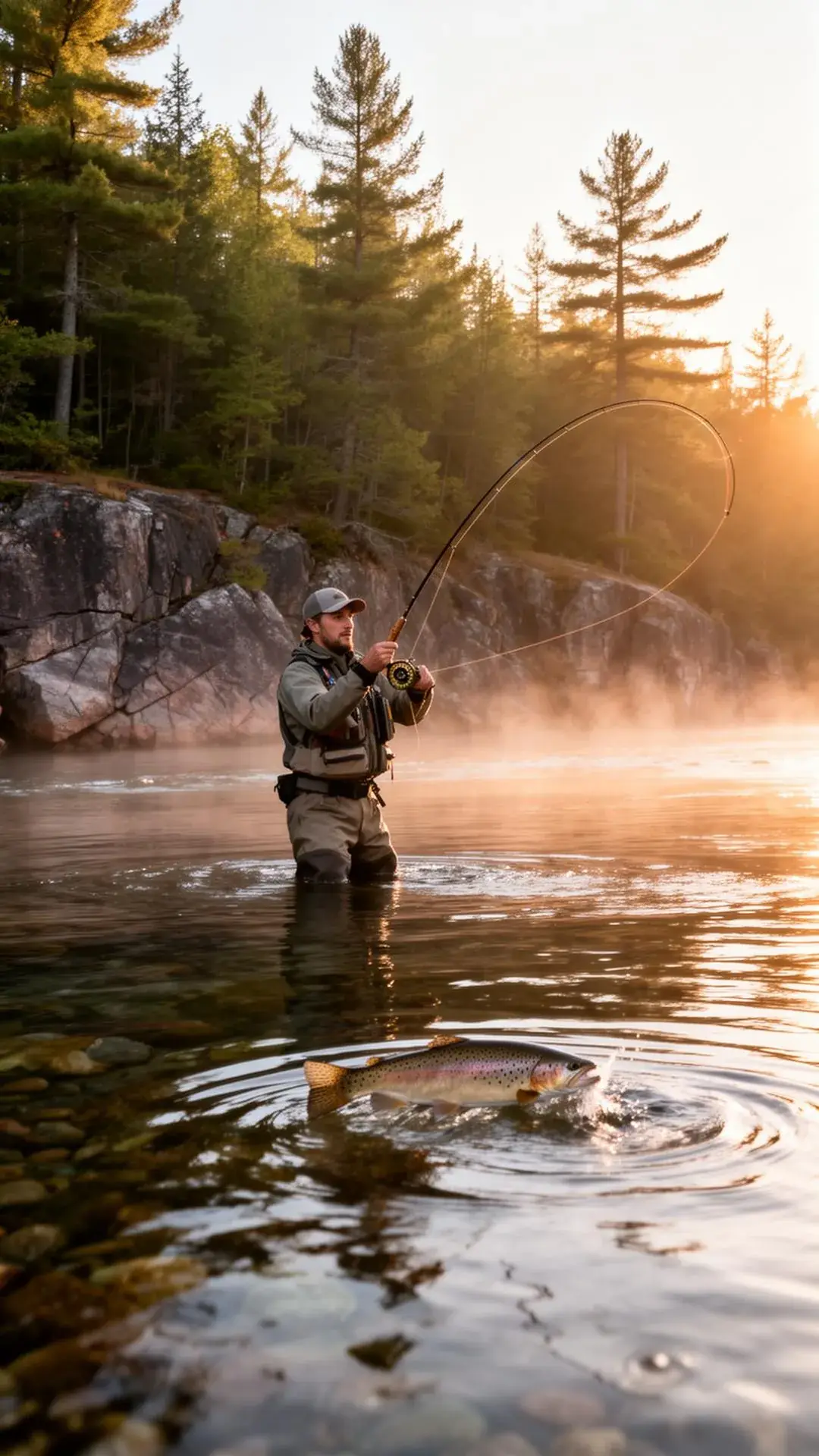
Fly fishing, though, is at home on Ontario's backcountry streams. A 3- or 4-weight rod in the 7- to 8-foot range is ideal for the kind of roll casts and bow-and-arrow casts demanded by brush-choked banks. Dry flies, nymphs, and soft hackle wet flies all produce. Match the local hatch if you can — caddis, mayflies, and stoneflies are the staples of most Ontario stream insect communities — but a well-presented Elk Hair Caddis or Royal Wulff rarely gets ignored by a hungry brookie.
For spin anglers, small inline spinners (Mepps Aglia, Blue Fox Vibrax in sizes 00 to 2) are the workhorses of brook trout fishing across Ontario. Gold and silver blades both produce; in dark, tannic water, gold tends to win. Small spoons like the Len Thompson Yellow and Red or a Kastmaster in the 1/8- to 1/4-ounce range are also reliable. If you're fishing a plunge pool or deep run, a small jig head tipped with a soft plastic grub or a live garden worm can be deadly, bounced slowly along the bottom.
Live bait — particularly worms and leeches — will catch fish when hardware comes up short, but check Ontario regulations for the specific area you're fishing. Some designated trout streams and zones within parks restrict or prohibit bait use.
Ontario's fishing regulations for brook trout vary significantly by zone, water body, and season. Before you go, download the current Ontario Recreational Fishing Regulations Summary from the MNRF website or pick up a printed copy. Key things to check for your target area:
- Open season dates — brook trout seasons vary by region and can differ between lakes and streams
- Daily catch and possession limits — typically 5 brook trout in most zones, but this changes
- Size limits — some designated streams carry minimum size restrictions
- Bait restrictions — artificial-lure-only rules apply in some backcountry areas
- Park-specific rules — Algonquin Park, Killarney, and other provincial parks may carry additional restrictions beyond the general provincial regulations
Ignorance of the rules is not a defence. And frankly, wild brook trout populations in Ontario deserve the protection those rules provide. Practice selective harvest — if you're going to keep fish for a shore lunch, take what you'll eat and release the rest, especially the larger, older fish that are the backbone of a stream's breeding population.
Spring — from ice-out through early June — is the classic brook trout window. Water temperatures are ideal, fish are actively feeding after a long winter, and the season opener brings some of the best dry fly and spinner action of the year. Early season brookies in Ontario can be found in surprisingly shallow water, moving into riffles and margin areas to feed.
Early summer — late June through early July — remains productive, particularly on north-facing or heavily shaded streams that stay cold well into the season. Time your fishing for the morning and evening hours; midday heat pushes fish into the deepest, coldest pools.
Late summer can be challenging on lower-elevation streams, but high-gradient headwater creeks at elevation often fish well right through August. Seek shade, seek cold water, and fish early.
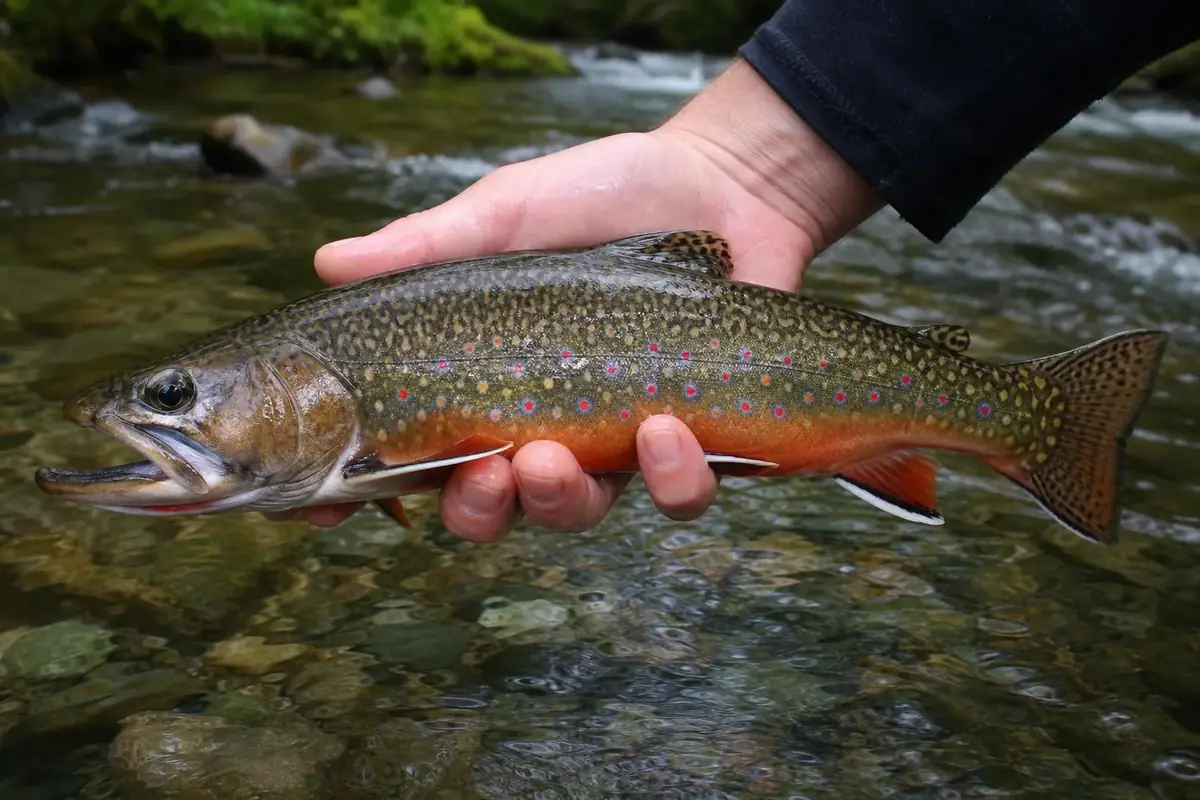
Fall brings the brook trout spawn — typically October into November in Ontario — and with it some spectacular colour. Males develop their vivid breeding dress: flanks blazing in orange and red, bellies deep crimson, fins edged in black and white. Fishing near redds (spawning beds) is discouraged and, in many areas, prohibited. Respect the fish and their season.
The brook trout streams of Ontario's backcountry are not an infinite resource. They are fragile systems, shaped over millennia, dependent on cold groundwater, stable riparian habitat, and the kind of low fishing pressure that only comes from places people have to work to reach.
Pack out everything you pack in. Crush your barbs to make release easier and less damaging. Handle fish with wet hands, minimize air exposure, and support the fish in the current until it swims strongly away. If you're camping near a stream, site your camp well back from the bank to protect riparian vegetation. And if you find a stream full of wild brook trout — if you stumble into that cedar-lined, cold-water paradise that feels like it belongs to another century — think carefully about how loudly you tell the world about it.
Some water is worth keeping to yourself.
The fish will thank you.
Always verify current Ontario fishing regulations at ontario.ca/fishing before your trip. A valid Ontario fishing licence is required for all anglers 18 and older.
More fishing near Algonquin Park
Topic Hub
Trout Fishing Ontario
Everything you need on this topic
Related Articles
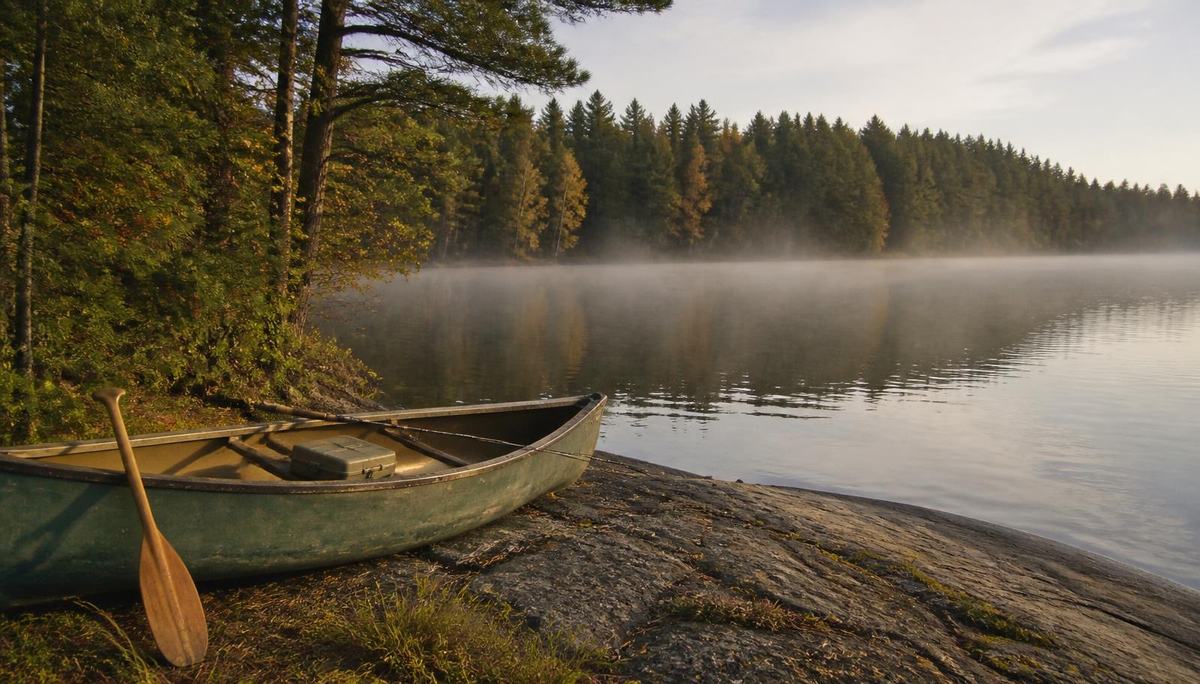
Fishing Spots
The Algonquin Canoe-In Fishing Guide
Where to launch, what's biting, and how to reach the trout water most anglers never see.
Species Guides
Algonquin's Secret Solitude: The Backcountry Guide to Quiet Brook Trout Corridors
A backcountry guide to the park's underfished interior — and how to fish it without crowds
Species Guides
Fly Fishing Ontario: The Complete Guide to Casting Across the Province
From Algonquin brookies to Georgian Bay steelhead — species, rivers, techniques, flies, gear, and seasons for fly anglers across Ontario.
Topic Hub
Trout Fishing Ontario
Everything you need on this topic